How to Move to Germany
Germany is the largest economy in the EU and one of the top destinations for skilled workers worldwide. The Skilled Immigration Act of 2023 expanded pathways for non-EU workers, and the EU Blue Card salary threshold was lowered to 50,700 EUR in 2024. Germany also offers a Freelance visa that is rare in Europe, letting self-employed workers establish themselves without employer sponsorship.
Updated March 2026
Germany Visa Options
Germany offers five main visa pathways for non-EU citizens. The EU Blue Card is the flagship skilled worker route, requiring a recognized university degree and a job offer paying at least 50,700 EUR per year. The Skilled Worker visa covers applicants with recognized vocational qualifications and requires B1 German. The Freelance visa (Freiberufler) allows self-employed professionals to relocate with a business plan and proof of client contracts. The Job Seeker Visa grants 6 months to find employment, requiring a university degree and proof of sufficient funds. The Working Holiday visa is available to citizens of select countries aged 18 to 30, with a 2,000 EUR threshold.
- EU Blue Card holders can get permanent residency in as little as 1.75 years with C1 German
- Dual citizenship has been allowed since June 2024
- Freelance visa is one of the few self-employment pathways in Europe
- Skilled Immigration Act 2023 lowered barriers for non-degree holders
- Public universities charge no tuition fees for most programs
| Visa Type ▲ | Income Threshold | Processing | Duration | Path to PR |
|---|---|---|---|---|
| EU Blue Card For highly qualified workers with university degree | €50,700 | 2 months | 4 years | Yes |
| Freelance Visa For self-employed professionals and freelancers | N/A | 3 months | 3 years | Yes |
| Job Seeker Visa 6-month visa to search for employment | N/A | 3 months | 0.5 years | No |
| Residence Permit for Self-Employment (Investor) Residence permit for entrepreneurs and investors establishing a business with economic benefit to Germany | N/A | 3 months | 3 years | Yes |
| Residence Permit for Study Purposes (§16b AufenthG) Residence permit for foreign nationals admitted to a recognized German higher education institution | N/A | 3 months | 2 years | Yes |
| Residence Permit without Gainful Employment Residence permit for financially self-sufficient individuals including retirees (discretionary) | N/A | 3 months | 1 year | Yes |
| Skilled Worker Visa For workers with recognized vocational qualifications | N/A | 3 months | 4 years | Yes |
| Working Holiday Visa For young adults (18-30) from partner countries to work and travel in Germany for up to 12 months | €2,000 | 6 weeks | 1 year | No |
Cost of Living in Germany
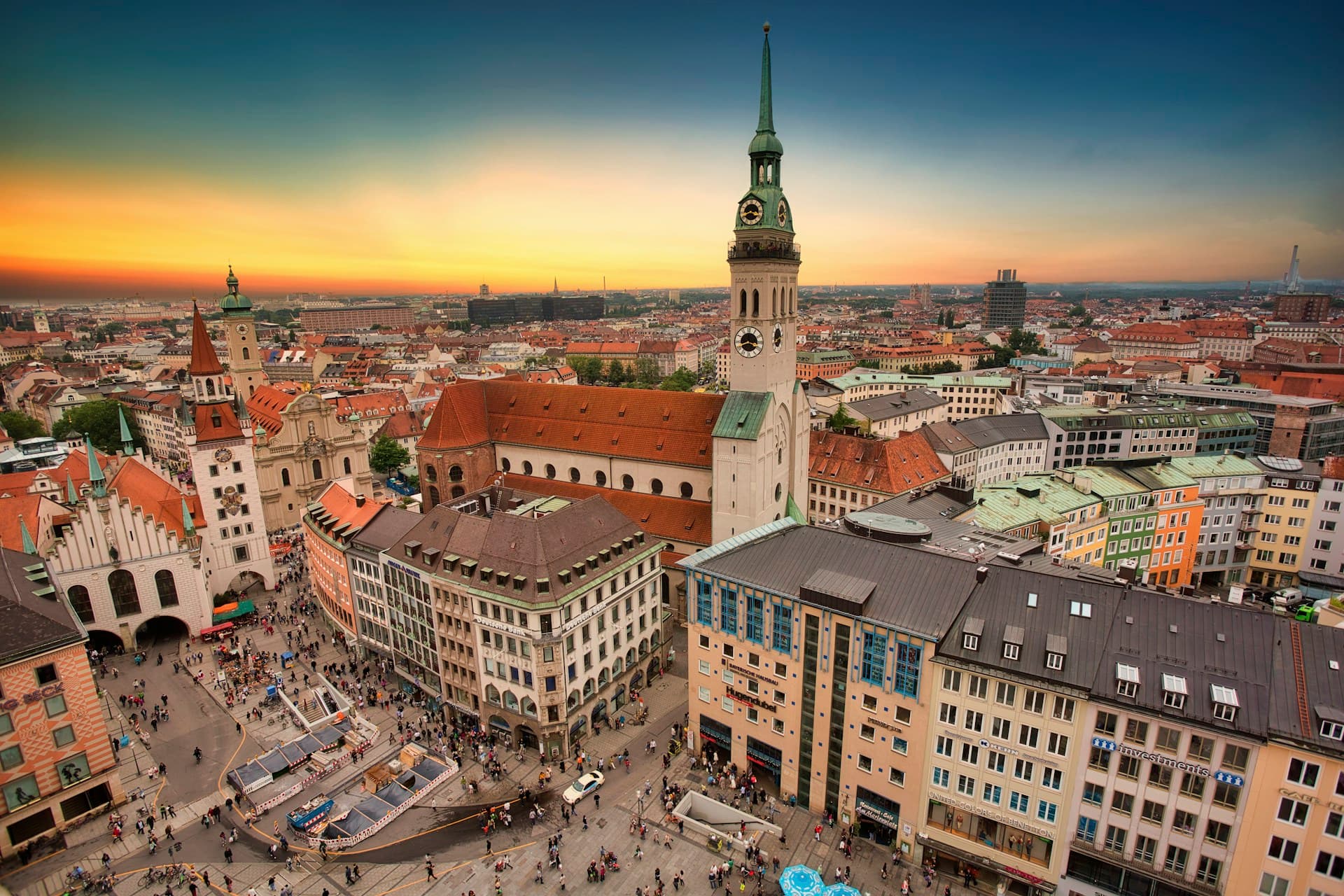
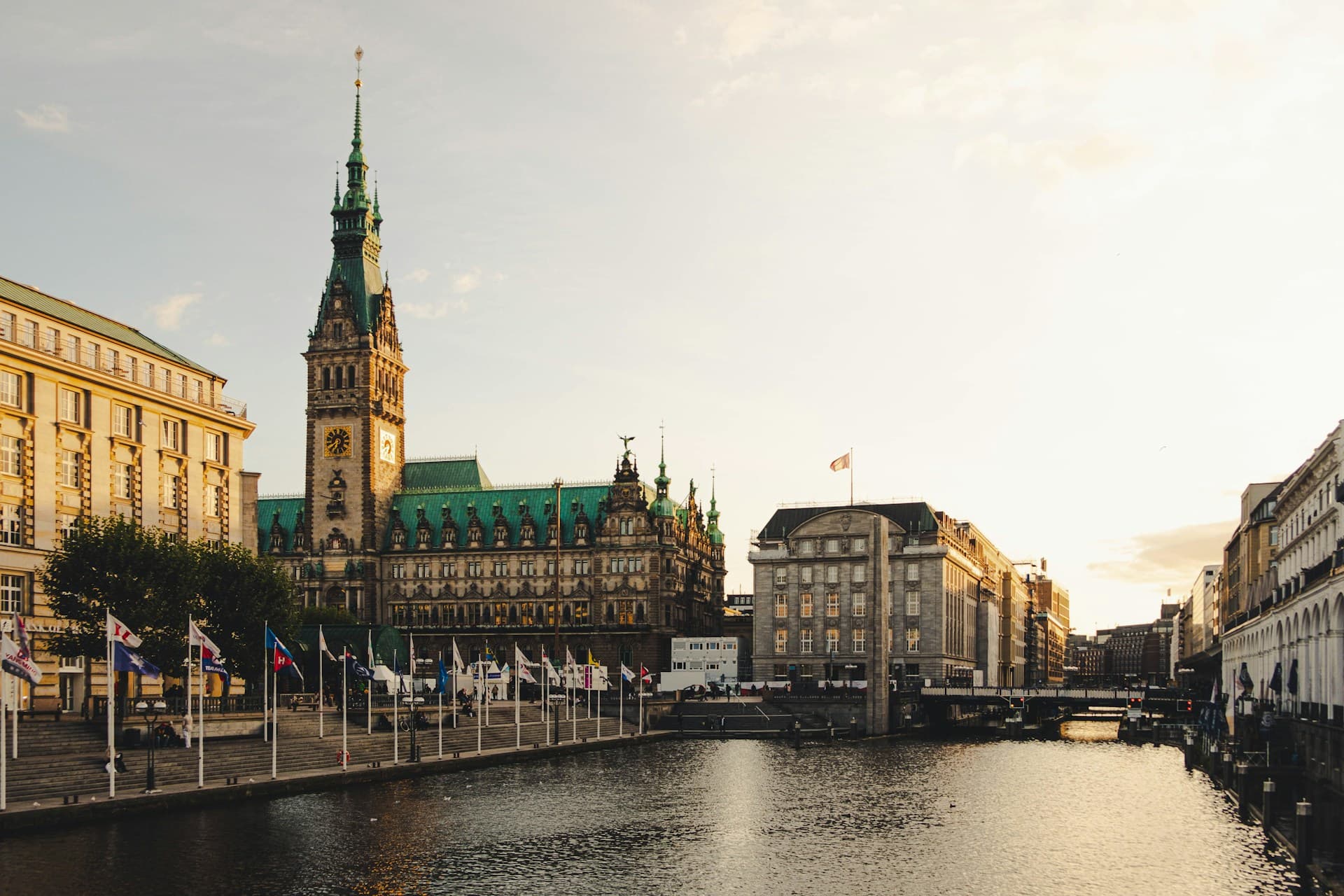
Germany is moderately priced by Western European standards. The median salary is approximately 44,000 EUR per year. Rent in Munich is the highest in the country, with one-bedroom apartments in the city center running 1,200 to 1,800 EUR per month. Berlin, Hamburg, and Frankfurt are slightly cheaper at 900 to 1,400 EUR. Smaller cities like Leipzig, Dresden, and Nuremberg offer rents 40 to 50 percent below Munich. A single person can expect monthly costs of 1,600 to 2,200 EUR outside Munich, including rent.
Language Requirements
German language proficiency is not required for the initial EU Blue Card application, but it is essential for long-term settlement. The settlement permit (Niederlassungserlaubnis) requires B1 German, demonstrated through a Goethe-Zertifikat or telc certificate. EU Blue Card holders with C1 German can qualify for PR in as little as 1.75 years. Citizenship requires B1 German plus passing the Einburgerungstest.
Credential Recognition
Foreign university degrees are evaluated through the anabin database maintained by the KMK. If your institution and degree are listed as "H+" in anabin, your degree is automatically recognized. For degrees not listed, the ZAB provides official recognition statements, which typically take 4 to 8 weeks. Regulated professions like medicine, law, and teaching require additional state-level licensing beyond degree recognition.
Visa Application Process
German visa applications are submitted at the German embassy or consulate in your country of residence. The EU Blue Card processes in roughly 8 weeks. The Skilled Worker and Freelance visas take about 12 weeks each. Required documents include a valid passport, a recognized qualification, a job offer or business plan, proof of health insurance, and a clean criminal record. The fast-track procedure (beschleunigtes Fachkrafteverfahren) allows employers to pre-approve your application, reducing processing time.
Path to Permanent Residency and Citizenship
The standard path to a settlement permit requires 5 years of continuous residence and B1 German. EU Blue Card holders qualify after 3.3 years with B1 German, or 1.75 years with C1 German. Germany reduced the citizenship timeline from 8 years to 5 years in 2024, and dual citizenship is now permitted for all nationalities. The fast-track option allows citizenship in as little as 3 years with C1 German and demonstrated special integration contributions.
Not Set on a Destination Yet? Check Out Some of Our Other Country Guides


Your First Days in Germany
Arriving in Germany requires completing several administrative steps in a specific order. The Anmeldung (address registration) must be done at your local Burgeramt within 14 days of moving into your apartment. This registration is a prerequisite for opening a bank account and receiving your Steuer-ID (tax identification number). Expect the full setup process to take 4 to 8 weeks.
📋Anmeldung (Address Registration)
Mandatory registration at your local Bürgeramt within 14 days of moving to Germany. You will need your passport and Wohnungsgeberbestätigung (landlord confirmation of residence).
~1 weeks🏦Open a German Bank Account
A local bank account is essential for salary, rent, and daily expenses. Traditional banks (Sparkasse, Deutsche Bank) perform Schufa checks; fintech options like N26 and bunq offer faster setup but require Anmeldung first.
~3 weeks⚖️Register at the Finanzamt (Tax Authority)
Your Steuer-ID (tax identification number) is auto-assigned after Anmeldung, but registration at the local Finanzamt is needed for tax class assignment (Steuernummer) and official tax status.
~4 weeks🛡️Enroll in Health Insurance (Krankenversicherung)
Health insurance is mandatory for all residents in Germany. Choose between gesetzlich (public, ~8-9% of income) and privat (private, income-based) coverage. Employers typically handle enrollment for employed workers.
~2 weeks📋Obtain Aufenthaltstitel (Residence Permit)
Non-EU residents need an Aufenthaltstitel from the Ausländerbehörde (immigration office). Bring your Anmeldung, employment contract, health insurance proof, and biometric passport photos.
~8 weeks⚖️Register for GEZ (Broadcasting Fee)
Every household in Germany is required to pay a monthly broadcasting fee (Rundfunkbeitrag) of €18.36 to fund public television and radio. Register online at rundfunkbeitrag.de.
~1 weeks🏠Find Long-Term Housing (Wohnung)
Finding a rental apartment requires understanding cold rent vs warm rent, preparing a Schufa Auskunft (credit report), and negotiating Kaution (security deposit, typically 2-3 months cold rent).
~8 weeks⚙️Build Your Network in Germany
German society emphasizes Verein culture (clubs and associations). Join through Stammtisch (regular meetups), InterNations (expat community), meetup.com events, and Volkshochschule (adult education courses).
~8 weeksMoving with Family
Spouses and children can accompany you or join later through family reunification. Spouses of EU Blue Card holders do not need to demonstrate German language skills before arrival, though other visa categories may require A1 German from the spouse. German public schools are free and compulsory from ages 6 to 18. Childcare (Kita) is subsidized and in many states is free from age 3, though waitlists in Berlin and Munich can run 6 to 12 months.
Healthcare in Germany
Health insurance is mandatory for all residents. Employees earning below 69,300 EUR per year must enroll in statutory insurance (gesetzliche Krankenversicherung), which costs roughly 14.6% of gross salary split between employer and employee. Those earning above the threshold or who are self-employed can opt for private insurance. Statutory insurance automatically covers non-working spouses and children.
Taxes in Germany
Germany taxes residents on worldwide income using a progressive scale from 14% to 45%, plus a 5.5% solidarity surcharge on the tax amount. Income up to 11,604 EUR per year is tax-free. Social contributions for health insurance, pension, unemployment, and long-term care add roughly 20% on top of income tax for employees. Freelancers pay the full social contribution themselves but can deduct business expenses.
Frequently Asked Questions
Related Resources
From the Blog
Top 3 Destinations for Germany Expats (2023 Data via 2025 OECD Report)
Biggest in Europe
Credential Recognition for Skilled Workers
Papers, Please
Explore Cities

Compare Germany
Visa guides for Germany
Ready to Start Planning?
Explore tools, guides, and expert connections to help you plan your move.
Explore Resources