Moving to South Africa from Zimbabwe
Work and residence permit pathways, tax obligations, healthcare access, banking logistics, and daily life for Zimbabweans relocating to South Africa.
2026-04-17
Visa and Permit Pathways for Zimbabweans
Zimbabwe is the single largest source country for foreign nationals in South Africa, with over one million Zimbabweans living across the country. The migration corridor is driven by geographic proximity, economic opportunity, family ties, and shared languages. South Africa's Department of Home Affairs (DHA) administers all visa and permit categories [1].
Zimbabwe Exemption Permit (ZEP) history.
South Africa has issued special dispensation permits to Zimbabwean nationals several times, including the Dispensation of Zimbabweans Project (DZP), the Zimbabwe Special Permit (ZSP), and most recently the Zimbabwe Exemption Permit (ZEP). These permits allowed Zimbabweans to live and work in South Africa without going through the standard work visa process. The ZEP program has undergone several extensions and policy changes. As of recent government announcements, ZEP holders have been given transition periods to apply for mainstream visa categories. Check DHA's current guidance for the latest status, as this policy area changes frequently [1].
General Work Visa.
The standard pathway for Zimbabweans without special dispensation. Requires a job offer from a South African employer, and the employer must demonstrate that the position could not be filled by a South African citizen or permanent resident. The employer obtains a recommendation from the Department of Employment and Labour. Applications are submitted through the nearest South African embassy or consulate, or through a VFS Global center [1].
Critical Skills Visa.
For individuals possessing skills on South Africa's Critical Skills List (published by the Department of Home Affairs and the Department of Higher Education). Applicants must demonstrate qualifications and experience in the relevant field. This visa does not require a job offer at the time of application, though you must find employment within 12 months [1]. Professions commonly on the list include engineering, ICT, healthcare, and certain trades.
Business Visa.
For Zimbabweans who want to establish or invest in a business in South Africa. Requires a minimum capital investment (amount set by DHA regulations), a viable business plan, and registration with the Companies and Intellectual Property Commission (CIPC). The business must employ a minimum number of South African citizens.
Study Visa.
For Zimbabwean students accepted at South African universities and colleges. Requires proof of acceptance, proof of financial means, medical insurance, and a police clearance certificate. Students can work part-time (limited hours) during their studies.
Relative's Visa.
Zimbabweans with immediate family members who are South African citizens or permanent residents can apply for a relative's visa. This visa is for spouses, children, and dependent parents. The South African relative must provide an undertaking of financial support.
Permanent Residence.
After five years on a work visa, you can apply for permanent residence [1]. Spouses of South African citizens can apply after two years of marriage. Permanent residence grants the right to live and work indefinitely, access public services, and apply for citizenship after a further period [1]. The application process involves DHA and can take a substantial period to process due to backlogs.
Border management.
The Beitbridge border post between Zimbabwe and South Africa is one of the busiest land crossings in Africa. Wait times can be many hours, particularly during holiday periods (December-January). Ensure all documentation is in order before crossing. Undocumented border crossing is illegal and carries serious penalties.
Tax Obligations in South Africa
South Africa taxes residents on worldwide income. Once you become a South African tax resident (by spending more than 91 days in South Africa in the current year and more than 915 days over the preceding five years, or by being "ordinarily resident"), all global income is taxable [1].
Progressive tax rates.
South Africa's personal income tax rates are progressive, with brackets ranging from 18% to 45% for the highest earners [1]. Employment income is subject to PAYE (Pay As You Earn) withholding by your employer. You file an annual return with SARS (South African Revenue Service) between July and November.
Double taxation.
South Africa and Zimbabwe have a double taxation agreement (DTA) that prevents double taxation on the same income [2]. If you earn income in Zimbabwe while a South African tax resident (rental income from Zimbabwean property, business income from Zimbabwean operations), the treaty provides relief through foreign tax credits. Given Zimbabwe's own tax system and the hyperinflation history, cross-border tax planning requires careful attention to currency conversion and timing.
Foreign income exemption.
South African residents who work abroad for an extended period may qualify for the foreign employment income exemption under section 10(1)(o)(ii) of the Income Tax Act [1]. The exemption applies if you spend more than 183 full days outside South Africa in any 12-month period starting or ending in the year of assessment, of which more than 60 days must be consecutive [1]. This is relevant for Zimbabweans with South African tax residency who travel back to Zimbabwe or elsewhere for work. The exemption has a monetary cap per year.
UIF (Unemployment Insurance Fund).
Employees and employers each contribute 1% of the employee's remuneration to UIF [1]. UIF provides short-term relief for workers who become unemployed, and also covers maternity, adoption, and illness benefits. Foreign workers on valid work permits are entitled to UIF benefits.
Tax registration.
Register as a taxpayer with SARS to obtain a tax reference number. You can register at a SARS branch or through the SARS eFiling portal [1]. Your employer will need your tax number for PAYE deductions. Filing through SARS eFiling or the SARS MobiApp is straightforward.
Zimbabwean tax obligations.
Zimbabwe taxes its residents on worldwide income. Once you cease to be a Zimbabwean tax resident, you are generally taxed only on Zimbabwean-source income. ZIMRA (Zimbabwe Revenue Authority) administers the Zimbabwean tax system. Coordinate your exit with a tax professional to confirm your residency cessation and avoid filing gaps.
Healthcare and Medical Aid
South Africa's healthcare system has two tiers: public healthcare, which is free or low-cost at government hospitals and clinics, and private healthcare, accessed through medical aid (health insurance) schemes.
Public healthcare.
Government hospitals and clinics provide free primary healthcare to all people in South Africa, regardless of nationality or immigration status. The quality of public healthcare varies significantly by province and facility. Urban hospitals (such as Chris Hani Baragwanath in Johannesburg and Groote Schuur in Cape Town) have well-trained staff but face overcrowding and long wait times. Rural and township clinics may have limited resources. For basic primary care, vaccinations, and chronic disease management, public facilities are accessible.
Medical aid (private insurance).
Most employed Zimbabweans in South Africa's formal sector join a medical aid scheme, either through employer-sponsored plans or individual membership. Major medical aid providers include Discovery Health, Bonitas, Momentum Health, and Medihelp. Plans range from basic hospital-only coverage to comprehensive plans covering outpatient visits, chronic medication, dental, and optical care. Premiums depend on the plan level, age, and number of dependants.
Gap cover.
Medical aid schemes do not always cover the full cost of procedures at private hospitals, because specialists often charge above the medical aid "tariff." Gap cover insurance fills the difference. Many employers offer gap cover as a benefit, or you can purchase it individually.
Chronic medication.
If you are on chronic medication, bring a supply sufficient for the transition period and a letter from your Zimbabwean doctor listing generic names and dosages. Most medications available in Zimbabwe are also available in South Africa, often at lower cost due to South Africa's larger pharmaceutical market and generic drug manufacturing base. Register for a Chronic Disease List (CDL) benefit with your medical aid to ensure ongoing medication is covered.
Emergency services.
South Africa's public emergency services (ambulance, emergency rooms) are free at government facilities. Private ambulance services (Netcare 911, ER24) are available to medical aid members. In emergencies, both public and private hospitals treat all patients regardless of insurance status.
Mental health.
Mental health services are available through both public and private sectors. Medical aid schemes are required to cover certain mental health benefits under the Mental Health Care Act. Private psychologists and psychiatrists are widely available in major cities. Many practitioners in Gauteng and other provinces with large Zimbabwean populations are familiar with the specific stressors facing immigrant communities.
Banking and Finances
Opening a South African bank account.
You need a valid passport, work permit or visa, proof of residence in South Africa (utility bill or lease agreement), and a letter from your employer confirming employment. Major banks include Standard Bank, FirstRand (FNB), Absa, Nedbank, and Capitec. Capitec has become popular among immigrant communities for its low fees and accessible branch network. Account opening at most banks is same-day if documents are in order. FICA (Financial Intelligence Centre Act) compliance requires proof of identity and residential address.
Transferring money from Zimbabwe.
Zimbabwe's financial system has gone through multiple currency changes (Zimbabwean dollar, multi-currency regime, RTGS dollar, ZiG). Cross-border transfers from Zimbabwe to South Africa can be complicated by exchange controls and currency instability. Many Zimbabweans bring cash (USD) across the border at Beitbridge, subject to customs declaration requirements (amounts above a threshold must be declared). Formal bank transfers and mobile money services (Mukuru, WorldRemit) handle the corridor, though fees and exchange rates vary.
Remittances to Zimbabwe.
Sending money back to Zimbabwe is a major financial activity for Zimbabwean workers in South Africa. Dedicated remittance services (Mukuru, Hello Paisa, WorldRemit, Mama Money) serve this corridor specifically, with pick-up points across Zimbabwe. Rates and fees are competitive due to the large volume. Mobile money (EcoCash) receives are available from some providers. Bank transfers are possible but slower and more expensive.
Cost of living.
South Africa is generally more expensive than Zimbabwe for housing in major cities (Johannesburg, Cape Town, Pretoria, Durban), but the gap has narrowed with Zimbabwe's own cost increases. Renting in townships and suburban areas is significantly cheaper than city centers. Grocery prices are moderate. South African supermarkets (Shoprite, Pick n Pay, Checkers, Spar) are well-stocked and often cheaper than Zimbabwean equivalents. Public transport (minibus taxis) is affordable but informal.
Credit and loans.
Building a South African credit profile takes time. Banks use credit bureaus (TransUnion, Experian, XDS) to assess creditworthiness. Start with a basic savings account and progress to a credit card or small personal loan to build a track record. Home loans are available to permanent residents and, in some cases, work permit holders with stable employment and good credit, though deposit requirements may be higher for non-citizens.
Savings and investment.
Tax-Free Savings Accounts (TFSAs) are available to South African tax residents, allowing investment growth free of income tax, dividends tax, and capital gains tax up to annual and lifetime contribution limits. Unit trusts, retirement annuities, and pension funds are the main long-term savings vehicles. Financial advisors registered with the Financial Sector Conduct Authority (FSCA) can assist with planning.
Moving Logistics
Overland transport.
The primary route from Zimbabwe to South Africa is through the Beitbridge border post on the Limpopo River. The journey from Harare to Johannesburg by road is approximately 1,000 km and takes 12-15 hours including border crossing time. Cross-border bus services (Greyhound, Intercape, Musina Express) run daily. Moving companies specializing in the Zimbabwe-South Africa corridor (Stuttaford Van Lines, Elliott Mobility, and smaller operators) handle household goods transport.
Border crossing.
Beitbridge is notorious for long queues, especially during peak periods (December holidays, Easter, month-end). Arrive early, have all documentation ready (passport, visa, vehicle registration if driving, customs declarations), and budget several hours for the crossing. Vehicle searches are routine. Declaring goods and currency above the threshold avoids penalties and confiscation.
Customs duties.
Personal effects being imported as part of a relocation may be subject to customs duties and VAT (currently 15%) unless they qualify for a rebate under the household effects provisions. You must provide an inventory of goods, proof of prior residence in Zimbabwe, and evidence that items were owned and used before the move. New or commercial goods are subject to full duty and VAT. SARS administers customs at the border.
Driving in South Africa.
Zimbabwean driving licenses are accepted for a limited period. For long-term residence, exchange your Zimbabwean license for a South African one through the nearest Driving License Testing Centre (DLTC). The process may require a learner's test and an eye test. South Africa drives on the left, same as Zimbabwe, so road rules feel familiar.
Accommodation on arrival.
If you do not have contacts in South Africa, short-term accommodation options include guest houses, backpacker hostels, and Airbnb in major cities. Many Zimbabweans stay with family or community contacts initially. Formal rental leases typically require proof of income, a deposit (one to two months' rent), and sometimes a reference from a previous landlord.
Mobile and connectivity.
South Africa's mobile networks (Vodacom, MTN, Cell C, Telkom Mobile) offer prepaid SIM cards with no contract. RICA (Regulation of Interception of Communications Act) requires you to register your SIM card with a valid ID and proof of address. Data prices have decreased in recent years, and 4G/5G coverage is available in urban areas.
Safety.
South Africa has high crime rates in certain areas. Research neighborhoods before choosing where to live. Gated communities and security estates are common. Avoid walking alone at night in unfamiliar areas. Keep valuables out of sight in vehicles. Join local community safety groups (WhatsApp groups, CPF forums) for area-specific advice.
Cultural Adjustment
Language.
South Africa has 11 official languages. English is the primary language of business, government, and education in most urban areas. Many Zimbabweans speak Shona or Ndebele as a first language. Ndebele speakers often find communication easy in areas where isiZulu is spoken, as the two languages are mutually intelligible. English proficiency among Zimbabweans is generally high, which facilitates workplace integration. Learning basic phrases in isiZulu (in Gauteng), isiXhosa (in Western Cape and Eastern Cape), or Afrikaans (widely spoken alongside English in many workplaces) helps with daily interactions.
Zimbabwean community.
The Zimbabwean diaspora in South Africa is large and well-organized, concentrated in Gauteng (Johannesburg, Pretoria), Cape Town, and Durban. Community organizations, churches (particularly apostolic and Pentecostal denominations), and informal networks provide support for newcomers. Zimbabwean grocery stores, restaurants, and services (hair salons, tailoring) are common in areas with large Zimbabwean populations.
Xenophobia.
Zimbabweans and other foreign nationals in South Africa have faced incidents of xenophobic violence and discrimination, particularly in townships and informal settlements. While these incidents do not represent the majority of South Africans, awareness is important. Avoid areas known for tension during periods of unrest. Keep copies of your documentation (passport, work permit) accessible at all times. Community networks often share early warnings about potential flashpoints.
Workplace culture.
South African workplaces in the formal sector are professional and multicultural. Labor laws are strong, with protections for all workers regardless of nationality (provided you have a valid work permit). Minimum wage applies to most sectors. Employment contracts are standard. The Commission for Conciliation, Mediation and Arbitration (CCMA) handles workplace disputes. Zimbabweans are generally well-regarded for their work ethic and English proficiency.
Education.
South African public schools accept children of legal foreign residents. You need the child's passport, study permit (for children over school-going age thresholds), proof of residence, and previous school records. Some schools require a placement assessment. Private schools are available in all major cities but are expensive. University admission for foreign students requires a study visa and may involve a qualification equivalency assessment through SAQA (South African Qualifications Authority).
Food.
South African and Zimbabwean cuisines share many elements: sadza/pap (maize meal), braai (barbecue), beans, and leafy greens (muriwo/morogo). Zimbabwean specialties like maputi, matemba, and kapenta are available at Zimbabwean stores. South African supermarkets stock most ingredients familiar to Zimbabweans. The braai culture in South Africa is a natural extension of Zimbabwean outdoor cooking traditions.
Sports.
Cricket and football are popular in both countries, providing an immediate social connection. Rugby is South Africa's dominant sport and can be a gateway to broader social integration, even as a spectator. Joining local sports clubs, gym groups, or running clubs helps build social networks beyond the Zimbabwean community.
Climate.
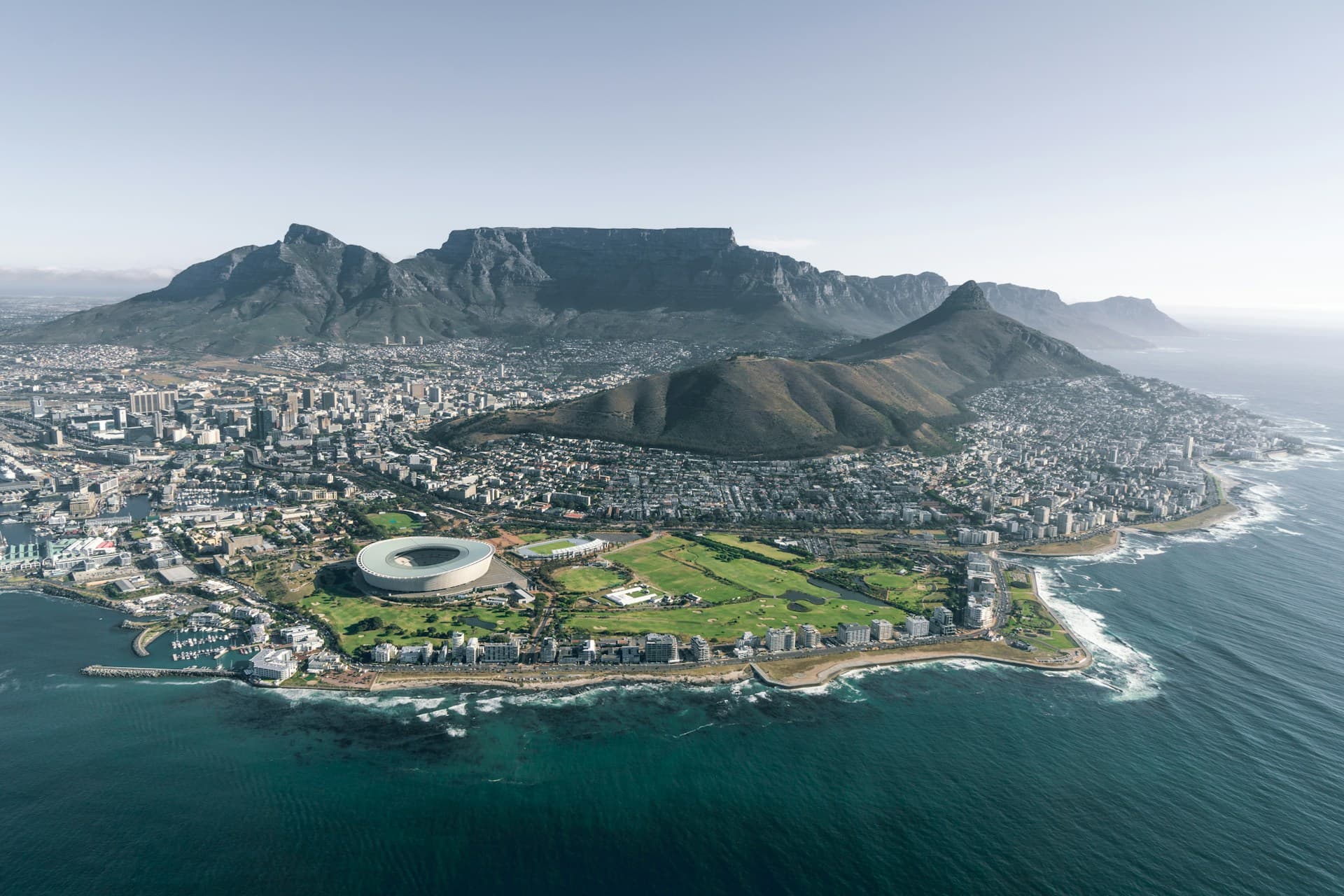
Gauteng (Johannesburg, Pretoria) has a similar climate to Harare: summer rainfall, mild winters with cold nights, and abundant sunshine. Cape Town has a Mediterranean climate with wet winters and dry summers, which is different from anything in Zimbabwe. Durban and the east coast are subtropical and humid. If you are relocating from the Zimbabwean Lowveld, the climate is comparable to Limpopo province.
Frequently Asked Questions
Compare South Africa
Visa guides for South Africa
Sources
- Department of Home Affairs, South Africa — DHA administers all visa and permit categories for foreign nationals in South Africa, including general work visas, critical skills visas, business visas, study visas, relative's visas, and permanent residence applications. ZEP transition policy guidance is published through DHA. (published 2025-10-01, accessed 2026-04-17)
- South African Revenue Service — South Africa taxes residents on worldwide income with progressive rates from 18% to 45%. Tax residency is determined by the physical presence test (91+ days in current year and 915+ days over five years) or the ordinarily resident test. SARS eFiling portal handles registration and annual returns. (published 2025-10-01, accessed 2026-04-17)
- South African Revenue Service — List of South Africa's double taxation agreements, including the South Africa-Zimbabwe DTA providing relief from double taxation through foreign tax credits. (published 2025-10-01, accessed 2026-04-17)
Prepare for Your Move to South Africa
Connect with relocation experts who specialize in helping Zimbabweans settle in South Africa.
Talk to a Relocation Expert