Moving to Germany from Turkey
Visa pathways, tax obligations, healthcare transition, and practical planning for Turkish citizens relocating to Germany.
2026-04-17
Tax Obligations and the German-Turkish Treaty
Once you establish residence in Germany, you become subject to German tax on your worldwide income. Germany uses a progressive income tax system with rates from 14% to 45%, plus the solidarity surcharge (Solidaritatszuschlag) of 5.5% on the tax amount for incomes above the exemption threshold [1].
German-Turkish Double Taxation Agreement.
The bilateral tax treaty prevents double taxation on most income types [2]. Employment income is generally taxed only in the country where the work is performed. If you retain Turkish-source income (rental property, dividends, business interests), the treaty assigns primary taxing rights and provides credit or exemption relief in the other country.
Church tax (Kirchensteuer).
This applies only if you register a Christian denomination during your Anmeldung. Most Turkish residents register as "konfessionslos" (no religious affiliation) or Muslim, neither of which triggers church tax in Germany. Germany does not collect a mosque tax.
Turkish tax exit.
Notify the Turkish Revenue Administration (Gelir Idaresi Baskanligi) of your departure. If you maintain Turkish-source income, Turkey may continue to tax it under the treaty's provisions. Turkish citizens living abroad for more than 6 months are generally no longer Turkish tax residents on their worldwide income, but specific situations (Turkish rental income, capital gains on Turkish property) may still create Turkish filing obligations [2].
Social security.
Germany and Turkey have a bilateral social security agreement that coordinates pension and insurance contributions [3]. Turkish nationals working in Germany pay into the German system (Rentenversicherung, unemployment insurance, health insurance, long-term care insurance) through payroll deductions. Your Turkish SGK (Sosyal Guvenlik Kurumu) contribution history can be considered for pension eligibility under the bilateral agreement's aggregation provisions.
Self-employment.
Self-employed individuals register with the local Finanzamt and pay income tax through quarterly advance payments (Vorauszahlungen) [4]. Self-employed persons must arrange their own health insurance (public or private) and are not automatically enrolled in the state pension system. A self-employed residence permit (Aufenthaltserlaubnis zur selbstandigen Tatigkeit) requires demonstrating economic viability and public interest in your business.
Visa Pathways for Turkish Citizens
Turkish citizens need a visa to enter Germany for any stay exceeding 90 days or for any employment purpose [1]. You must apply at a German embassy or consulate in Turkey before departure [1]. You cannot convert a tourist visa into a residence permit from within Germany [1].
EU Blue Card.
The most common pathway for skilled Turkish professionals. Germany's implementation requires a recognized university degree (your Turkish diploma must be evaluated through anabin or by the KMK/ZAB credential recognition service) and a job offer meeting the salary threshold set by the Federal Employment Agency [2]. The Blue Card offers accelerated permanent residency and intra-EU mobility [3].
Skilled worker visa (Fachkraftevisum).
For professionals with recognized qualifications but without a university degree, or whose degree does not meet Blue Card salary thresholds [2]. Requires a concrete job offer from a German employer and recognition of your professional qualification [2]. The Federal Employment Agency conducts a labor market check unless the occupation is on the shortage list.
Chancenkarte (Opportunity Card).
Germany's points-based system for qualified professionals to enter Germany and search for work [2]. Requirements include a recognized degree or vocational qualification and points based on language skills, professional experience, age, and connection to Germany. This allows you to enter Germany to search for employment during the card's validity period [2].
Credential recognition (Anerkennung).
Turkish degrees and vocational qualifications must be recognized before you can use them professionally in Germany. The anabin database lists pre-evaluated foreign degrees. If your Turkish university and degree are listed as "H+" (institution) and "entspricht" (equivalent), recognition is straightforward. Otherwise, apply through the ZAB (Central Office for Foreign Education) for an individual assessment [3]. Regulated professions (medicine, engineering, teaching, law) require a separate professional recognition process.
Family reunification (Familiennachzug).
Once you hold a valid residence permit, your spouse and minor children can apply for family reunification visas. The spouse must demonstrate basic German skills (A1 level) before departure, typically proven through a Goethe-Institut certificate [1]. Processing times at the German embassy in Ankara and consulate general in Istanbul can stretch several months due to high demand.
Permanent residence (Niederlassungserlaubnis).
After holding a temporary residence permit for 5 years (or shorter with a Blue Card), meeting income, pension, and language requirements (B1 German), you can apply for permanent residence [3]. This removes the tie to a specific employer and grants indefinite residence rights [3].
Turkish-German special provisions.
The 1963 Ankara Agreement and its Additional Protocol established the EU-Turkey Association framework [4]. Turkish nationals who have been legally employed in Germany for a continuous period may acquire enhanced residence rights under the Association Council Decision 1/80, independent of national immigration law [4]. These rights are based on employment duration and cannot be withdrawn except on public order grounds.
Health Insurance Transition
Health insurance is mandatory in Germany. You cannot receive a residence permit without proof of coverage, and your employer cannot process your first paycheck without confirming your insurer.
Public health insurance (GKV).
Employees earning below the Versicherungspflichtgrenze (approximately EUR 69,300/year in 2026) must enroll in public insurance. Premiums are approximately 14.6% of gross salary, split equally between you and your employer, plus a Zusatzbeitrag (supplementary contribution) of 1-2% depending on the insurer. Major public insurers include TK, AOK, Barmer, and DAK.
Coverage includes doctor visits, hospital stays, prescription drugs (with small copays), mental health treatment, dental (basic), maternity, and rehabilitation. Non-working spouses and children under 25 are covered free through Familienversicherung. This is a significant benefit compared to Turkey's SGK dependent coverage limitations.
Coverage gap.
Between leaving Turkey and starting your German employment, you need a plan. Your Turkish SGK coverage does not extend to Germany for anything beyond emergency treatment. If there is a gap between your arrival and your employment start date, purchase short-term international health insurance (Incoming-Versicherung) to cover the interim period. Some German public insurers (TK, AOK) allow enrollment to take effect from the day you start work, but coverage does not retroactively cover the period before enrollment.
Private health insurance (PKV).
Available to employees earning above the threshold and to self-employed individuals. Premiums are based on age and health status at enrollment, not income. Private insurance offers shorter wait times and broader coverage, but premiums increase with age and family members require separate policies. For most Turkish employees relocating to Germany, public insurance is the practical and economical choice, especially for families.
Prescription drugs.
Germany uses different brand names for many medications. Bring documentation listing your current medications by generic (INN) names and dosages. Many drugs available over the counter in Turkey require prescriptions in Germany, and vice versa. Your new Hausarzt (general practitioner) can write prescriptions for ongoing medications, but controlled substances require a fresh evaluation by a German physician.
Not Set on a Destination Yet? Check Out Some of Our Other Country Guides
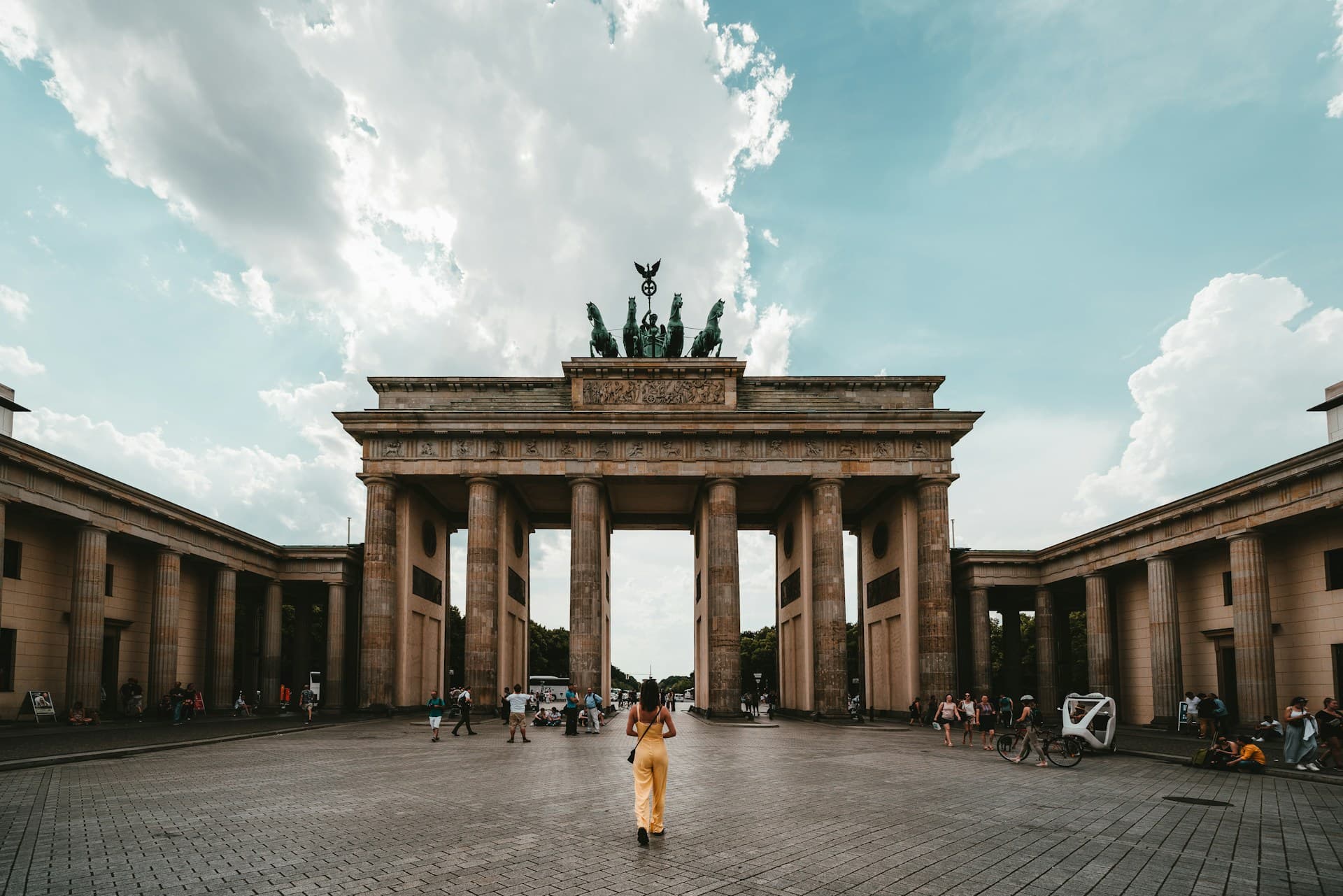
Banking and Financial Setup
Opening a German bank account.
A German bank account is essential for salary deposits, rent payments (Uberweisung), and health insurance premiums. Germany runs on SEPA direct debit (Lastschrift) and bank transfers.
Major banks include Deutsche Bank, Commerzbank, and Sparkasse. Online banks like N26, ING Germany, and DKB offer English-language interfaces. N26 can be opened with your passport and a German address, making it practical as a first account while you wait for your residence permit card. Traditional banks typically require your passport, Anmeldung confirmation, and residence permit or Fiktionsbescheinigung.
Schufa credit score.
Schufa is Germany's credit bureau. Your Turkish credit history does not transfer. You start with no Schufa record, which is treated as neutral. Build your Schufa profile by opening a bank account, registering a phone contract, and paying all bills on time. Landlords require a Schufa-Auskunft (credit report) for apartment applications. Request your free annual self-disclosure (Datenkopie) from Schufa to monitor your score.
Cash culture.
Germany is more cash-dependent than Turkey. Many restaurants, bakeries, and smaller shops are cash-only. Always carry cash. When cards are accepted, it is usually Girocard (linked to your German bank account) rather than Visa or Mastercard. This is a shift from Turkey's widespread credit card acceptance.
Sending money to Turkey.
For TRY-EUR transfers, Wise and Revolut offer significantly better exchange rates than traditional bank wire transfers. Western Union and MoneyGram have physical locations in Germany but charge higher fees. If you are supporting family in Turkey, set up recurring transfers through Wise to reduce per-transaction costs.
Pension coordination.
Under the bilateral social security agreement, your Turkish SGK contributions count toward minimum qualifying periods for German pension eligibility, and vice versa [1]. When you reach retirement age, you can claim separate pensions from both countries based on your respective contribution periods. German pension contributions are mandatory for employees and amount to approximately 18.6% of gross salary, split between you and your employer.
Moving Logistics
Shipping household goods.
Road freight from Turkey to Germany takes 4-7 days depending on origin and destination cities. A dedicated truck or shared cargo arrangement handles most moves. Because Turkey is not an EU member, your shipment clears customs at the EU external border. Personal effects and household goods owned for at least 6 months before your move can enter duty-free under the transfer of residence (Ubersiedlungsgut) exemption, provided you have your residence permit and an itemized inventory list. New items may be subject to customs duty and 19% German VAT.
Customs declaration.
Unlike intra-EU moves, a Turkey-to-Germany shipment requires customs paperwork. Prepare a detailed inventory list (Inventarliste) in German or English. Present your passport, residence permit, Anmeldung confirmation, and proof of previous Turkish residence at the customs office. The transfer of residence exemption covers items for personal use that you have owned and used for at least 6 months. Items purchased for resale or new items do not qualify.
Apartment hunting.
Finding an apartment in Berlin, Munich, Frankfurt, or Hamburg is extremely competitive. Vacancy rates in major German cities are below 2%. Landlords require extensive documentation: Schufa-Auskunft, proof of income (employment contract or last three pay slips), a reference from your previous landlord (Mietschuldenfreiheitsbescheinigung), a copy of your ID, and a personal cover letter. For your first apartment, consider a furnished temporary rental (1-3 months) through Wunderflats or HousingAnywhere. Turkish community networks in cities like Berlin, Cologne, and Stuttgart often have direct rental leads through local contacts.
Driving.
Your Turkish driver's license is valid in Germany for 6 months after establishing residency. After that, you must convert it to a German license. Turkey has a bilateral agreement with Germany, so conversion requires only a theoretical (written) exam, not a practical driving test. The theory test is available in Turkish. Study the official question catalog, as German traffic rules differ from Turkish ones in several areas (right-of-way rules, speed limits, Autobahn conventions).
Pets.
Dogs and cats entering Germany from Turkey require an ISO-compliant 15-digit microchip, a valid rabies vaccination (at least 21 days before travel), and a rabies antibody titer test (blood test at least 30 days after vaccination and 3 months before entry). The titer test requirement applies because Turkey is not on the EU's list of approved third countries for pet travel. A veterinary health certificate issued by an authorized Turkish veterinarian is also required. No quarantine is needed if all documentation is in order.
Cell phone.
German mobile carriers include Telekom, Vodafone, and O2. Budget providers like Aldi Talk, Lidl Connect, and congstar offer affordable prepaid plans. Prepaid SIM cards require identity verification with your passport. Postpaid contracts require a Schufa check and German bank account. Turkish phone contracts should be canceled or suspended before departure to avoid ongoing charges.
Cultural Adjustment
Language.
German is essential for daily life, bureaucracy, and career advancement. Government offices operate exclusively in German. While major employers in tech and international business use English, career ceilings exist for non-German speakers in most industries. Many Turkish citizens in Germany learn German quickly, supported by the large Turkish-speaking community and widely available German-Turkish language resources. Integrationskurse (integration courses) are subsidized by the BAMF and include 600 hours of German instruction plus 100 hours of civic orientation [1].
Turkish community in Germany.
Germany has the largest Turkish diaspora outside of Turkey, with approximately 3 million people of Turkish origin. Cities like Berlin (Kreuzberg, Neukolln), Cologne, Stuttgart, Duisburg, and Hamburg have established Turkish neighborhoods with mosques, grocery stores, restaurants, cultural centers, and community organizations. This community infrastructure can ease the transition, but building connections outside the Turkish community accelerates language learning and professional integration.
Directness.
Germans communicate more directly than most Turks expect. Feedback at work is specific and unvarnished. Customer service interactions prioritize clarity over indirect communication, which can read as cold to newcomers. The adjustment period is typically a few months.
Sundays.
Nearly everything is closed on Sundays, legally enforced (Ladenschlussgesetz). Supermarkets, shops, hardware stores. Gas stations and train station shops are exceptions. Plan grocery shopping for Saturday. This is stricter than Turkey's Sunday trading patterns.
Recycling (Mulltrennung).
Germany has rigorous waste sorting. Separate bins for paper, organic waste, packaging (Gelber Sack or Gelbe Tonne), glass (sorted by color), and residual waste. Bottles and cans with a Pfand (deposit) symbol must be returned to supermarket machines. Neighbors and landlords enforce compliance through social pressure and formal complaints.
Noise rules (Ruhezeiten).
Quiet hours are typically 10pm to 6am, all day Sundays, and often 1pm to 3pm on weekdays. No loud music, drilling, or vacuuming during these periods. German noise norms are significantly stricter than Turkish ones. Neighbors will complain, and landlords take these complaints seriously.
Work-life balance.
The German working week is typically 35-40 hours. Employees get a minimum of 20 vacation days (most contracts offer 25-30), and people use them. Sick days are separate, and your employer pays your full salary for up to 6 weeks of illness. Overtime is uncommon in many sectors and often compensated with time off rather than extra pay.
Religious practice.
Mosques are present in all major German cities. Halal food is widely available in urban areas, particularly in neighborhoods with Turkish communities. Religious holidays (Eid al-Fitr, Eid al-Adha) are not public holidays in Germany, so you will need to use vacation days. Some employers accommodate religious observance with flexible scheduling.
Frequently Asked Questions
Compare Germany
Visa guides for Germany
Sources
- Bundeszentralamt für Steuern (BZSt) [German] — German tax residency rules, progressive income tax structure, and Steuerliche Identifikationsnummer issuance for residents. (published 2025-06-01, accessed 2026-04-17)
- Organisation for Economic Co-operation and Development — OECD Model Tax Convention framework underpinning the German-Turkish Double Taxation Agreement, including provisions for employment income, pensions, and cross-border taxation. (published 2025-01-01, accessed 2026-04-17)
- Federal Foreign Office (Auswartiges Amt) — Visa requirements for Turkish nationals entering Germany, family reunification procedures, and A1 German language requirement for spouse visas. (published 2025-06-01, accessed 2026-04-17)
- Make it in Germany (Federal Ministry for Economic Affairs and Climate Action) — EU Blue Card requirements, Chancenkarte points-based system, skilled worker visa categories, and salary thresholds for qualified professionals in Germany. (published 2025-06-01, accessed 2026-04-17)
- Make it in Germany (Federal Ministry for Economic Affairs and Climate Action) — Self-employment registration, Finanzamt obligations, and insurance requirements for self-employed individuals in Germany. (published 2025-06-01, accessed 2026-04-17)
- Federal Office for Migration and Refugees (BAMF) — German residence permit types, credential recognition requirements, and permanent residence (Niederlassungserlaubnis) eligibility criteria for third-country nationals. (published 2025-06-01, accessed 2026-04-17)
- Federal Office for Migration and Refugees (BAMF) — BAMF-subsidized integration courses comprising 600 hours of German language instruction and 100 hours of civic orientation for immigrants. (published 2025-06-01, accessed 2026-04-17)
- U.S. Social Security Administration — Bilateral social security agreement framework between Germany and Turkey covering pension contribution aggregation and coordination of benefits. (published 2024-01-01, accessed 2026-04-17)
- EUR-Lex, Official Journal of the European Union — The 1963 Ankara Agreement establishing EU-Turkey Association, including Additional Protocol provisions and Association Council Decision 1/80 granting enhanced residence rights to Turkish workers. (published 1964-12-29, accessed 2026-04-17)
Prepare for Your Move to Germany
Connect with language tutors who specialize in helping Turkish speakers prepare for life in Germany.
Find a German Tutor