Moving to Germany from Serbia
Visa pathways, tax obligations, healthcare access, and practical planning for Serbian citizens relocating to Germany.
2026-04-17
Visa and Residence Permit Pathways
Serbian citizens can enter Germany and the Schengen area without a visa for up to 90 days within any 180-day period for tourism, business meetings, or family visits [1]. This short-stay travel does not authorise employment or long-term residence. For any work or stay beyond 90 days, you need a national visa (type D) issued by the German embassy in Belgrade before you travel [1].
Skilled worker visa (Fachkräfteeinwanderung).
Germany's Skilled Immigration Act, amended substantially in 2023 and phased in through 2024, governs the main pathways for qualified workers from non-EU countries [2]. If you hold a recognised university degree or a vocational qualification that has been assessed as equivalent to a German one by the responsible recognition body, you can apply for a residence permit for skilled workers (§18a or §18b AufenthG) with a binding job offer. The Federal Employment Agency (Bundesagentur für Arbeit) must approve the employment conditions unless the occupation is on an exemption list.
EU Blue Card.
The German EU Blue Card is available to university graduates with a job offer at or above the salary threshold set in German law transposing Directive 2021/1883 [3]. A lower salary threshold applies to shortage occupations in STEM, medicine, and IT. The Blue Card provides a fast track to permanent residence (Niederlassungserlaubnis) after 21 months with B1 German or 27 months with A1 German, and it allows intra-EU mobility [3].
Chancenkarte (Opportunity Card).
Introduced in June 2024 under the amended Skilled Immigration Act, the Chancenkarte is a points-based residence permit for job seekers without a pre-arranged offer [4]. Points are awarded for qualifications, German or English language proficiency, professional experience, age, and connection to Germany. Holders can work up to 20 hours per week while searching and must secure qualifying employment within the card's validity period.
Recognition of Serbian qualifications.
Non-EU professional and vocational qualifications generally require formal recognition before a residence permit for skilled work is issued [5]. The anabin database and the central recognition portal (Anerkennung in Deutschland) identify which authority handles your specific qualification. Serbian university degrees in regulated professions (medicine, engineering, teaching) go through the relevant state-level body. Non-regulated professions use the IHK FOSA or HWK chambers. Processing takes several months, so start before you apply for the visa.
Vocational training visa.
Serbia is one of the Western Balkan countries with a special arrangement under §26(2) of the Employment Regulation (Beschäftigungsverordnung), known as the Western Balkans Regulation, which allows nationals of Albania, Bosnia and Herzegovina, Kosovo, North Macedonia, Montenegro, and Serbia to obtain a work visa for any occupation regardless of qualifications, subject to a binding job offer and Federal Employment Agency approval [6]. The annual quota is capped, and demand consistently exceeds supply. Applications go through the German embassy in Belgrade.
Family reunification.
A spouse and minor children can join you in Germany once you hold a residence permit and meet income and housing requirements. The spouse must demonstrate basic German (A1) before entry, with certain exemptions depending on visa category. Family members receive their own residence permits.
Permanent residence.
After 5 years on a standard residence permit (or 21-27 months on a Blue Card), you can apply for a Niederlassungserlaubnis (permanent settlement permit), subject to language level, pension contributions, and self-sufficiency requirements [7].
German Tax Obligations for Serbian Residents
Germany taxes residents on worldwide income. Once you are registered at a German address (Anmeldung) and spend more than 183 days in Germany in a calendar year, you are generally treated as a German tax resident [1].
Income tax (Einkommensteuer).
German income tax is progressive, with rates ranging from 14% on income above the basic personal allowance to 42% on income above approximately EUR 67,000 (2025 brackets), plus a solidarity surcharge of 5.5% on the income tax amount for high earners [2]. Church tax applies as a percentage of your income tax if you are registered with a recognized church [2].
Germany-Serbia double taxation agreement.
Germany and Serbia have a bilateral treaty for the avoidance of double taxation, originally concluded with the Federal Republic of Yugoslavia and continued with Serbia as a successor state [3]. The treaty assigns primary taxing rights by income category and prevents double taxation through the credit or exemption method depending on the income type. Employment income is generally taxed in the country where the work is performed.
Social security contributions.
German social security is mandatory for employees and covers health insurance, pension, unemployment, nursing care, and accident insurance. The combined employer-employee contribution rate takes a substantial share of gross salary, split approximately equally between you and your employer [4]. Germany and Serbia have a bilateral social security agreement that prevents double contributions for posted workers and allows aggregation of contribution periods for pension eligibility [4].
Tax class (Steuerklasse).
Your tax class determines how much income tax is withheld from your paycheck. Single workers get Class I. Married couples where both work get Class IV each, or can elect the III/V combination if one earns significantly more. The class affects monthly withholding but not your final annual tax liability, which is settled through the annual return.
Filing.
If your only income is from employment and you have no other German income sources, your employer withholds taxes monthly and you may not be required to file a return. However, filing is often advantageous because you can deduct moving expenses, language course fees, double-household costs (doppelte Haushaltsführung) if you maintain a home in Serbia during a transition period, and commuting costs (Pendlerpauschale).
Pension transfers.
Under the Germany-Serbia social security agreement, contribution periods in both countries can be combined toward meeting the minimum qualifying period for a German pension [4]. If you return to Serbia before reaching German pension age, you can still claim a German pension based on your German contributions once you reach the qualifying age.
Healthcare and Insurance
Germany has a dual healthcare system: statutory health insurance (gesetzliche Krankenversicherung, GKV) and private health insurance (private Krankenversicherung, PKV). Most employees earning below the annual threshold (around EUR 73,800 gross in 2025) must join the GKV system.
Statutory health insurance.
GKV covers doctor visits, hospital stays, prescription drugs, mental health treatment, dental basics, maternity care, and sick pay. The contribution rate is roughly 14.6% of gross salary plus a supplementary rate that varies by insurer, split equally between employer and employee. Major GKV providers include TK, AOK, Barmer, DAK, and IKK. You choose your insurer during your first job registration. Coverage extends to non-working spouses and children at no additional cost (Familienversicherung).
Private health insurance.
Employees above the income threshold, self-employed workers, and civil servants can opt for PKV. Premiums are based on age, health status, and coverage level rather than income. PKV typically offers shorter wait times for specialists and single-bed hospital rooms, but premiums rise with age and each family member needs a separate policy.
Transitioning from Serbian healthcare.
Serbia's healthcare system is not directly transferable. Your Serbian health insurance card stops working when you leave. Once you start employment in Germany and register with a GKV insurer, coverage begins from your first day of work. If there is a gap between arrival and your first working day, arrange travel health insurance or a short-term private policy to cover the interim.
Dental care.
GKV covers basic dental treatment, but crowns, bridges, and implants require significant out-of-pocket copayments. Many residents add a private dental supplemental policy (Zahnzusatzversicherung) to reduce these costs.
Prescriptions.
German pharmacies (Apotheke) fill prescriptions from licensed doctors. GKV covers most prescription drugs with a copay of EUR 5-10 per item. Bring a list of your current medications with generic names (INN) when you visit your first German doctor. Most common drugs are available under different brand names.
Finding a doctor.
Register with a Hausarzt (general practitioner) near your home. The Hausarzt coordinates referrals to specialists. In large cities, English-speaking doctors exist but are not guaranteed. The KBV doctor search (arztsuche.kvb.de) and the Jameda platform help locate doctors accepting new patients.
Not Set on a Destination Yet? Check Out Some of Our Other Country Guides
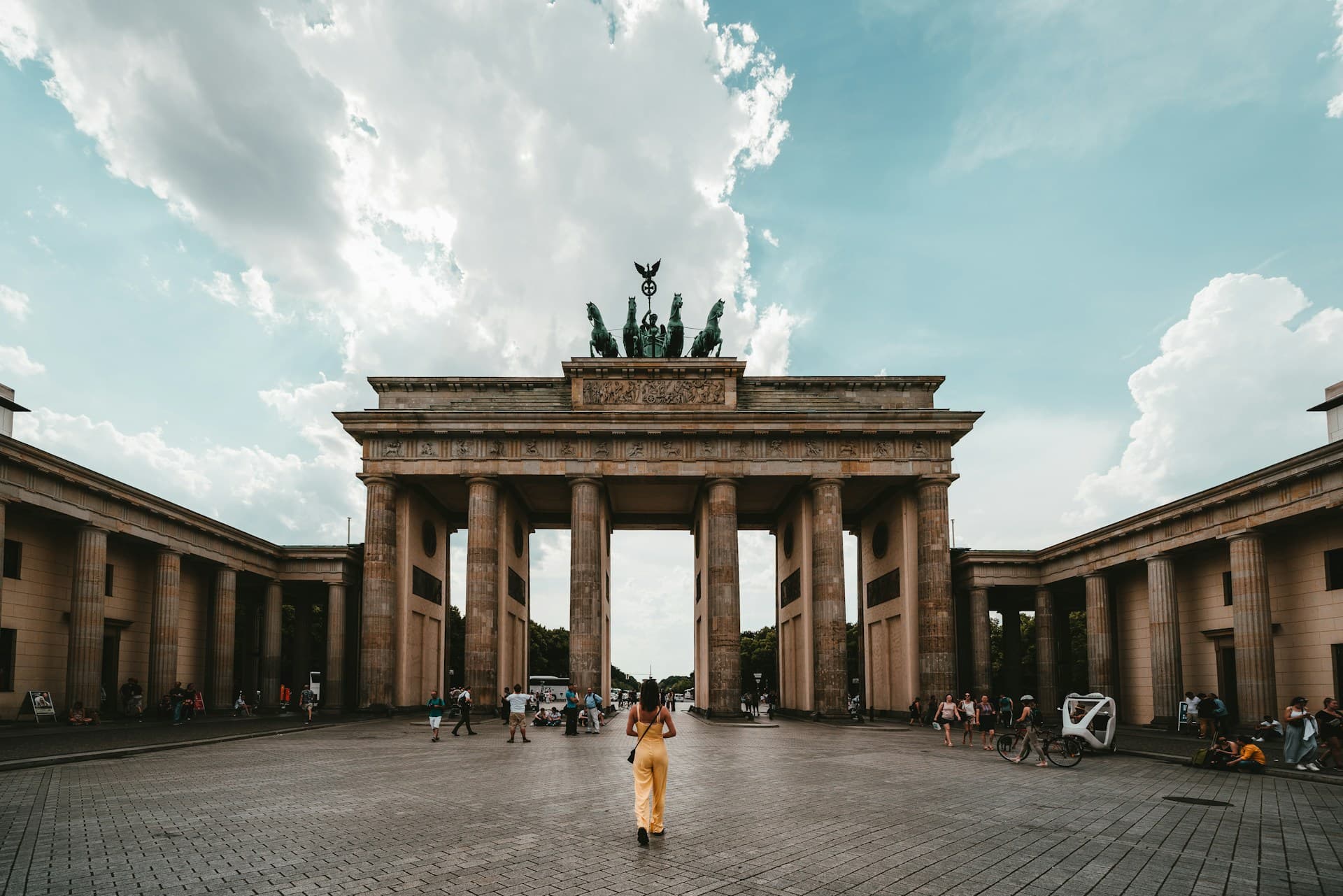
Banking, Finances, and Housing
Opening a German bank account.
You need a bank account before your first paycheck. Most German banks require your passport, Anmeldung confirmation (address registration), and sometimes your employment contract. Online banks (N26, comdirect, DKB, ING) can open accounts with video identification. Traditional banks (Sparkasse, Deutsche Bank, Commerzbank) require an in-person appointment. N26 and DKB are popular with newcomers because they offer English-language interfaces.
Transferring money from Serbia.
The Serbian dinar (RSD) is not freely convertible at competitive rates through most consumer platforms. Wise, Revolut, and Western Union handle EUR transfers between Serbian and German bank accounts. If you hold EUR savings in a Serbian bank, transferring to Germany is straightforward through SEPA or SWIFT. Serbia's National Bank regulations do not restrict outbound personal transfers for emigrating residents, but document the source of funds for German bank compliance.
SCHUFA credit history.
SCHUFA is Germany's main credit-reporting agency. You start with no SCHUFA record, which makes landlords and mobile-phone providers cautious. Open a bank account, register a mobile contract, and pay bills on time to start building your record. Some landlords require a SCHUFA-BonitätsAuskunft (credit report) as part of the rental application.
Finding housing.
Rental markets in Munich, Frankfurt, Stuttgart, Hamburg, and Berlin are very tight. Standard channels are ImmoScout24, WG-Gesucht (for shared flats), and eBay Kleinanzeigen. Expect to provide several documents at a viewing: SCHUFA report, salary statements or employment contract, copy of ID, and a Mietschuldfreiheitsbescheinigung (previous landlord's confirmation of no rent debt) if you have German rental history. Without a SCHUFA record, a letter from your employer confirming your salary and start date helps.
Security deposit (Kaution).
Landlords typically require up to 3 months' cold rent as a security deposit, payable in up to 3 installments. The deposit must be held in a separate savings account and returned with interest when you leave if there is no damage.
Cost of living comparison.
Germany is significantly more expensive than Serbia in housing, groceries, and services. Munich and Frankfurt are the most expensive cities. Mid-sized cities like Leipzig, Dresden, Nuremberg, and Dortmund offer substantially lower rents with good job markets, especially in manufacturing, logistics, and IT.
Remittances to Serbia.
Wise and Revolut typically offer better exchange rates for EUR-to-RSD transfers than traditional banks. Western Union and MoneyGram have physical pickup locations across Serbia. Compare the all-in cost (FX margin plus fee) before committing.
Moving Logistics
What to bring vs. buy.
Furniture is often included in German rental apartments (particularly in southern Germany where "Einbauküche" means the kitchen stays). Electronics work on the same voltage (230V, 50Hz) and plug type (Type F/Schuko) as Serbia, so you can bring appliances. Clothes, personal items, and documents are worth bringing; large furniture is usually cheaper to buy locally from IKEA, Mömax, or second-hand on eBay Kleinanzeigen.
Shipping belongings.
A small shipment (a few boxes) via DHL or a freight forwarder from Belgrade to Germany takes approximately a week by road. A full household move using a relocation company costs significantly less than intercontinental routes because Serbia and Germany are connected by road through Hungary and Austria. Get quotes from at least two companies with references from Serbian expats.
Customs.
If you are transferring your residence to Germany, personal belongings and household goods are generally exempt from customs duties and VAT under the EU transfer-of-residence provision, provided you have owned and used the items for at least 6 months and you are establishing your primary residence in Germany. You need your residence permit, an inventory list, and proof of prior residence in Serbia.
Driving licence.
Serbia and Germany have a bilateral agreement allowing holders of valid Serbian driving licences to convert them to German licences without re-sitting the full exam, subject to administrative conditions at the local Fahrerlaubnisbehörde. Conversion must typically be completed within 6 months of establishing residence in Germany. Until conversion, your Serbian licence is valid for up to 6 months after arrival.
Pets.
Dogs and cats entering Germany from Serbia need an ISO 15-digit microchip, a valid rabies vaccination given after the microchip and at least 21 days before travel, and an EU-format health certificate issued by an authorised veterinarian in Serbia. Germany does not require quarantine for Serbian pets meeting these requirements. Some German states (Bundesländer) have breed-specific restrictions and mandatory liability insurance for dogs.
Time zone.
Germany and Serbia share the same time zone (CET/CEST), so there is no adjustment for communication with family and contacts back home.
Cultural Adjustment and Integration
Language.
German language proficiency is the single biggest factor in long-term integration and career advancement. While some international companies operate in English, most employers, all government offices, and daily life (landlords, doctors, insurance, neighbours) run in German. Integration courses (Integrationskurs) funded by the BAMF are available to new residents and cover 600 hours of German plus 100 hours of civic orientation [1]. Many Serbian speakers find German grammar challenging but build conversational fluency within 6-12 months of immersion plus coursework. LottaLingo can connect you with a German tutor to start before you move.
Serbian community in Germany.
Germany hosts one of the largest Serbian diaspora populations in Europe, concentrated in Munich, Stuttgart, Frankfurt, Hamburg, Düsseldorf, and the Ruhr area. Serbian Orthodox churches, cultural associations, sports clubs (particularly football), and community events are active across these cities. The diaspora community can help with practical advice, job leads, and social integration, but building German-speaking friendships outside the community accelerates language acquisition and career growth.
Bureaucracy.
Germany runs on paperwork and appointments. The Bürgeramt (citizens' office) handles address registration, ID requests, and other municipal tasks. The Ausländerbehörde (foreigners' authority) handles residence permits. Both require appointments booked online, often weeks in advance. Bring every document you might need, originals and copies. Missing one piece of paper means a new appointment.
Work culture.
German workplaces value punctuality, direct communication, and clear boundaries between work and personal time. Meetings start on time. Email tone is formal by Serbian standards. Overtime exists but is less normalised than in many other countries, and employees use their full vacation entitlement (minimum 20 days, typically 25-30). Feedback is given directly, which can feel blunt.
Sunday and quiet hours.
Almost all shops are closed on Sundays. Bakeries and some gas-station shops are the exceptions. Quiet hours (Ruhezeiten) restrict noise on Sundays, public holidays, and typically from 10pm to 6am on weekdays. Mowing the lawn, drilling, or playing loud music during these times can result in complaints from neighbours.
Social life.
Germans tend to socialise through clubs (Vereine) and recurring activities rather than spontaneous invitations. Joining a sports club, a Stammtisch (regular pub meetup), or a hobby group is the fastest way to build a German social circle. Initial social interactions may feel reserved compared to Serbian warmth, but relationships deepen with consistency.
Frequently Asked Questions
Compare Germany
Visa guides for Germany
Sources
- Auswärtiges Amt (Federal Foreign Office) [German] — Serbian citizens can enter the Schengen area visa-free for up to 90 days in any 180-day period for tourism, business, and family visits. (published 2025-06-01, accessed 2026-04-17)
- Make it in Germany (Federal Government) — Skilled Immigration Act provisions for residence permits for skilled workers with recognised university degrees or equivalent vocational qualifications under §18a and §18b AufenthG. (published 2025-09-01, accessed 2026-04-17)
- Bundesamt für Migration und Flüchtlinge (BAMF) [German] — EU Blue Card requirements for Germany including salary thresholds, shortage occupation lower thresholds, and fast-track permanent residence after 21 or 27 months depending on German language level. (published 2025-06-01, accessed 2026-04-17)
- Make it in Germany (Federal Government) — Chancenkarte (Opportunity Card) as a points-based residence permit for qualified job seekers without a pre-arranged job offer, introduced June 2024. (published 2025-09-01, accessed 2026-04-17)
- Make it in Germany (Federal Government) — Requirement for formal recognition of non-EU professional and vocational qualifications before a skilled worker residence permit is issued, with the central recognition portal and anabin database as resources. (published 2025-09-01, accessed 2026-04-17)
- Bundesamt für Migration und Flüchtlinge (BAMF) [German] — Western Balkans Regulation under §26(2) Beschäftigungsverordnung allowing nationals of six Western Balkan countries including Serbia to obtain work visas for any occupation with an annual cap. (published 2025-06-01, accessed 2026-04-17)
- Bundesamt für Migration und Flüchtlinge (BAMF) [German] — Niederlassungserlaubnis (permanent settlement permit) eligibility after 5 years on a standard residence permit or 21-27 months on an EU Blue Card, subject to language, pension, and self-sufficiency requirements. (published 2025-06-01, accessed 2026-04-17)
- Bundeszentralamt für Steuern (BZSt) [German] — German tax residency established through registration at a German address (Anmeldung) or habitual presence exceeding 183 days, resulting in worldwide income taxation. (published 2025-06-01, accessed 2026-04-17)
- Bundeszentralamt für Steuern (BZSt) [German] — German progressive income tax rates from 14% to 42% plus solidarity surcharge and optional church tax. (published 2025-06-01, accessed 2026-04-17)
- Bundeszentralamt für Steuern (BZSt) [German] — Germany-Serbia bilateral double taxation agreement assigning taxing rights by income category and providing relief through credit or exemption method. (published 2025-06-01, accessed 2026-04-17)
- Bundesamt für Migration und Flüchtlinge (BAMF) [German] — BAMF-funded integration courses providing 600 hours of German language instruction plus 100 hours of civic orientation for new residents. (published 2025-06-01, accessed 2026-04-17)
Prepare for Your Move to Germany
Connect with a German language tutor who specialises in helping Serbian speakers prepare for life in Germany.
Find a German Tutor