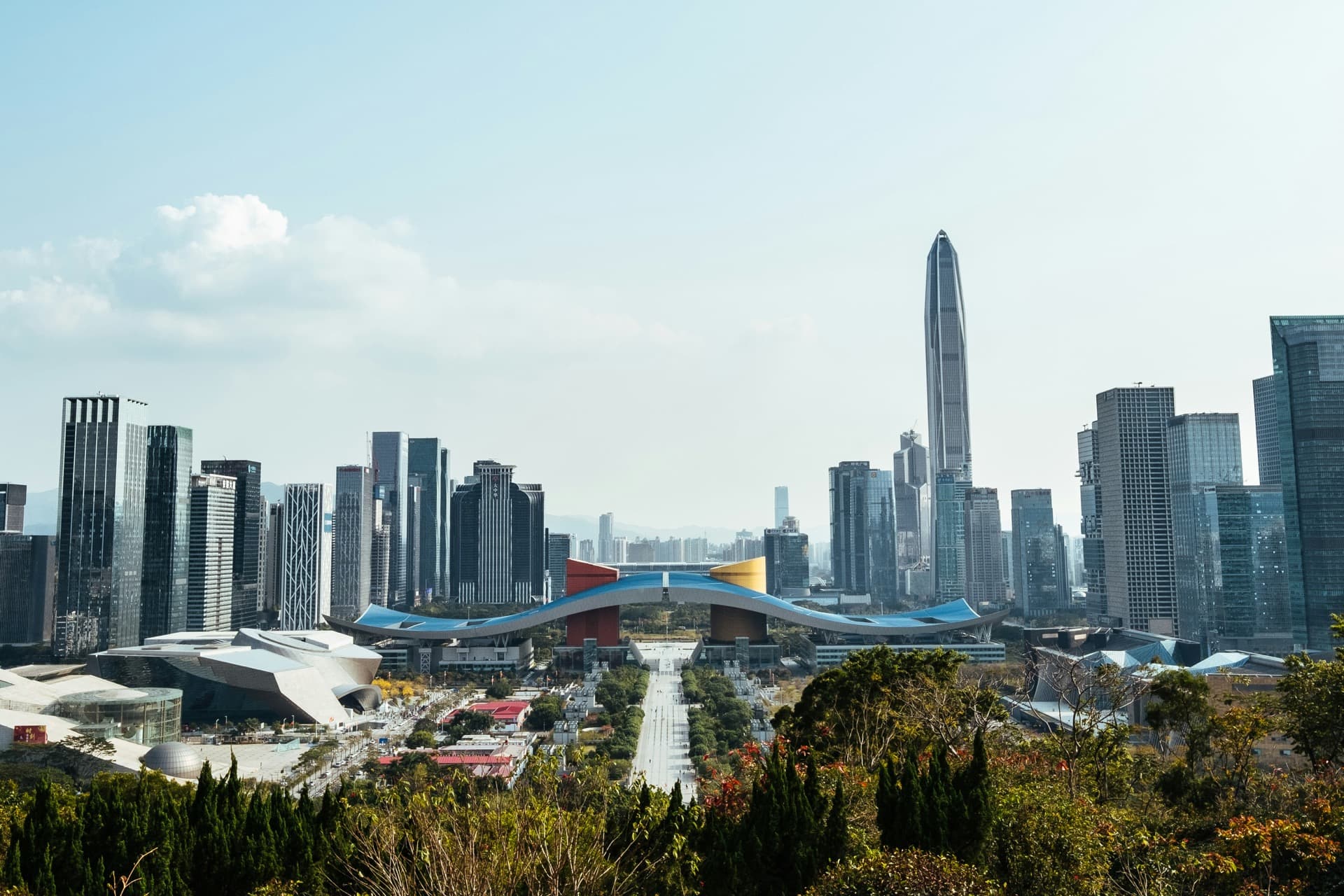
How to Move to China
China is the world's second-largest economy and a major destination for corporate transferees, English teachers, and specialized professionals. The work permit system uses a tiered A/B/C classification based on qualifications and salary. High-level talent can access the R visa with expedited processing, while the Z visa remains the standard route for most foreign workers. Permanent residence is possible after 4 to 5 years but remains difficult to obtain.
Updated March 2026
China Visa Options
China's work authorization system combines a visa (for entry) with a work permit and residence permit (for staying and working). The Z Visa is the standard work entry visa, required before arriving in China to take up employment. Once in China, workers receive a Work Permit classified as Category A (high-level talent, earning above CNY 600,000/year or with significant achievements), Category B (professional talent, the most common tier for degree holders with 2+ years of experience), or Category C (temporary or seasonal workers in limited quotas). The R Visa is a fast-track entry visa for individuals who meet China's "high-level foreign talent" criteria, typically Category A workers with government endorsement. Investors with stable investments of CNY 2 million or more over 3 consecutive years can apply for an Investment Residence Permit. The Qianhai SEZ in Shenzhen offers preferential work permit processing for tech and finance professionals.
- Z Visa is required for entry; work permit is issued after arrival
- Category A workers can receive work permits valid up to 5 years
- R Visa offers expedited processing for high-level talent
- Investment Residence Permit requires CNY 2 million+ over 3 years
- Qianhai SEZ in Shenzhen has streamlined processing for tech and finance
| Visa Type ▲ | Income Threshold | Processing | Duration | Path to PR |
|---|---|---|---|---|
| Investment Residence Permit For foreign investors with significant investment in China | €252,000 | 2 months | 5 years | Yes |
| Qianhai SEZ Talent Visa (Shenzhen) Preferential work permit for Qianhai Special Economic Zone in Shenzhen | N/A | 2 weeks | 2 years | Yes |
| R Visa (High-Level Talent) For highly skilled professionals meeting national talent criteria | €76,000 | 2 weeks | 5 years | Yes |
| Z Visa (Work Permit) Standard work visa with A/B/C tier permit system based on qualifications | N/A | 4 weeks | 1 year | Yes |
Cost of Living in China
Cost of living in China varies dramatically by city. Shanghai and Beijing are the most expensive, with one-bedroom apartments in the city center running CNY 6,000 to CNY 12,000 per month ($830 to $1,650). Tier-2 cities like Chengdu, Hangzhou, and Wuhan are 30 to 50 percent cheaper. A single person can live comfortably in a tier-1 city on CNY 10,000 to CNY 15,000 per month including rent, or CNY 6,000 to CNY 9,000 in tier-2 cities. Local food is very affordable, with meals at local restaurants costing CNY 20 to CNY 50. Western food and imported goods cost significantly more. Public transportation is excellent and cheap in all major cities, with subway fares starting at CNY 3.
Language Requirements
China has no formal Mandarin language requirement for work permits or residence permits. No standardized language test is required for permanent residence either. In practice, Mandarin proficiency is essential for daily life outside of international company environments. Most government offices, banks, hospitals, and landlords operate exclusively in Chinese. English proficiency is limited to international business settings, upscale hotels, and some hospitals in tier-1 cities. The HSK (Hanyu Shuiping Kaoshi) is the standard Mandarin proficiency exam, widely recognized domestically and internationally. For those planning long-term residence, reaching HSK 4 (roughly B1) enables functional independence in daily life.
Credential Recognition
Foreign academic credentials must be authenticated through CDGDC (China Academic Degrees and Graduate Education Development Center), China's degree verification authority. The process involves getting your degree apostilled or notarized in your home country, authenticated by the Chinese embassy, and then verified through CDGDC. Processing takes 2 to 4 weeks once documents arrive. For work permit applications, your employer handles submission to the local Foreign Expert Bureau. Regulated professions such as medicine, law, and accounting require separate Chinese licensing and, in most cases, Chinese-language examinations. Start credential authentication at least 2 months before your planned arrival.
Visa Application Process
The China work authorization process has three stages. First, your employer obtains a Work Permit Notification Letter from the local Foreign Expert Bureau (takes roughly 2 weeks for Category B, faster for A). Second, you apply for the Z Visa at a Chinese embassy in your home country using the notification letter, your passport, criminal background check, health examination results, and authenticated credentials. Z Visa processing takes 1 to 2 weeks. Third, after arriving in China, you convert the Z Visa into a Work Permit and Residence Permit at the local Public Security Bureau within 30 days. R Visa applicants follow a similar process but with expedited review. The entire process from start to working legally in China typically takes 6 to 10 weeks.
Path to Permanent Residence
Permanent residence in China (the "green card") requires 4 consecutive years of employment with a clean tax record and a minimum of 9 months per year spent in China. Category A workers with high salaries or significant contributions may qualify through an accelerated track. Investment-based PR requires a stable investment of at least CNY 2 million for 3 consecutive years with a good tax record. China does not grant citizenship through naturalization in any practical sense. The number of permanent residence permits issued has increased significantly since 2019 reforms, but it remains selective. Applicants must demonstrate stable income, accommodation, and no criminal record. China does not recognize dual citizenship.
Your First Days in China
Register at your local police station within 24 hours of arrival (hotels do this automatically, but if staying in private accommodation you must register in person). Convert your Z Visa to a Work Permit and Residence Permit within 30 days at the district Public Security Bureau. Opening a bank account requires your passport and residence permit. ICBC, Bank of China, and China Merchants Bank are widely used. Get a Chinese phone number immediately, as WeChat (essential for daily life, payments, and communication), Alipay, and most apps require Chinese phone verification. Set up WeChat Pay and Alipay as soon as possible since cash and international credit cards are rarely accepted.
📋Register at Local Police Station (PSB)
All foreigners must register their accommodation with the local Public Security Bureau (PSB) within 24 hours of arrival or any address change. Hotels do this automatically, but if staying in a private residence, you and your landlord must visit the nearest police station together. Failure to register can result in fines and visa complications.
~1 weeks📋Obtain Residence Permit
If staying longer than the visa-free period or on a work/study visa, apply for a Residence Permit at the local Entry-Exit Administration Bureau within 30 days of entry. This replaces your visa as your legal status document and is required for banking, phone contracts, and most services.
~4 weeks⚖️Register for Individual Income Tax
Register with the local tax bureau for Individual Income Tax (IIT). If employed, your employer withholds IIT monthly. Self-employed individuals and those with multiple income sources must file through the IIT app or local tax bureau. China taxes residents on worldwide income after 183 days of residence in a tax year.
~3 weeks🏦Open a Chinese Bank Account
Open an account at a major bank such as ICBC, Bank of China, China Construction Bank, or Agricultural Bank of China. You will need your passport, Residence Permit (or accommodation registration for short-term), a Chinese phone number, and sometimes a work permit. WeChat Pay and Alipay integration require a Chinese bank account.
~2 weeks🛡️Arrange Health Insurance Coverage
China has a public health insurance system (城镇职工基本医疗保险) that employed foreigners contribute to through payroll deductions. Coverage is basic and limited to certain hospitals. Most expats supplement with international private health insurance for broader coverage, English-speaking doctors, and access to international clinics.
~3 weeks🏠Secure Long-Term Rental Housing
Search for apartments through agents, platforms like Lianjia (贝壳找房), Ziroom, and SmartShanghai (in Shanghai) or TheBeijinger (in Beijing). Rental contracts are typically 12 months with 1-3 months deposit. Landlords require passport and valid visa. Always verify the landlord's ownership certificate before signing.
~4 weeks⚙️Build Your Network in China
Connect with expat communities through WeChat groups, Meetup events, and city-specific platforms. Join language exchange events (语言交换), sports leagues, and professional networking groups. WeChat is essential for social life in China. Apps like HelloTalk, Tandem, and local community boards help bridge the language gap.
~8 weeksMoving with Family
Spouses and children can apply for S1 (long-term) or S2 (short-term) dependent visas, which are converted to Family Reunion Residence Permits after arrival. Spouses who wish to work must obtain their own work permit through a separate employer. International schools in Beijing, Shanghai, Guangzhou, and Shenzhen offer IB, British, and American curricula, with annual fees ranging from CNY 100,000 to CNY 300,000 ($14,000 to $41,000). Chinese public schools are free for residents but instruction is entirely in Mandarin. Some cities restrict international school enrollment to holders of foreign passports only.
Healthcare in China
China has an extensive public healthcare system, but public hospitals are often overcrowded and primarily Chinese-speaking. International hospitals and VIP wings in tier-1 cities (United Family, Parkway, Raffles Medical) offer English-speaking staff and Western-standard care at higher prices. A specialist consultation at an international hospital costs CNY 500 to CNY 1,500. Work permit holders contribute to China's social insurance system, which includes basic medical insurance. Most expats supplement this with private international health insurance costing $1,500 to $4,000 per year depending on coverage level and provider network.
Taxes in China
China taxes residents on worldwide income using a progressive scale from 3% to 45%. You become a tax resident if you are domiciled in China or reside for 183 or more days in a tax year. Foreign employees who have been tax resident for fewer than 6 consecutive years can exclude foreign-sourced income not paid by a Chinese entity, provided they spend at least 30 consecutive days outside China in at least one of those years. Social insurance contributions total roughly 10% of salary for employees. There is no separate capital gains tax for individuals (investment income is taxed as regular income). VAT is 13% on most goods. Individual income tax is withheld monthly by employers.
Frequently Asked Questions
Ready to Start Planning?
Explore tools, guides, and expert connections to help you plan your move.
Explore Resources