Cambridge Exams for UK Admissions
How to Move to Ireland
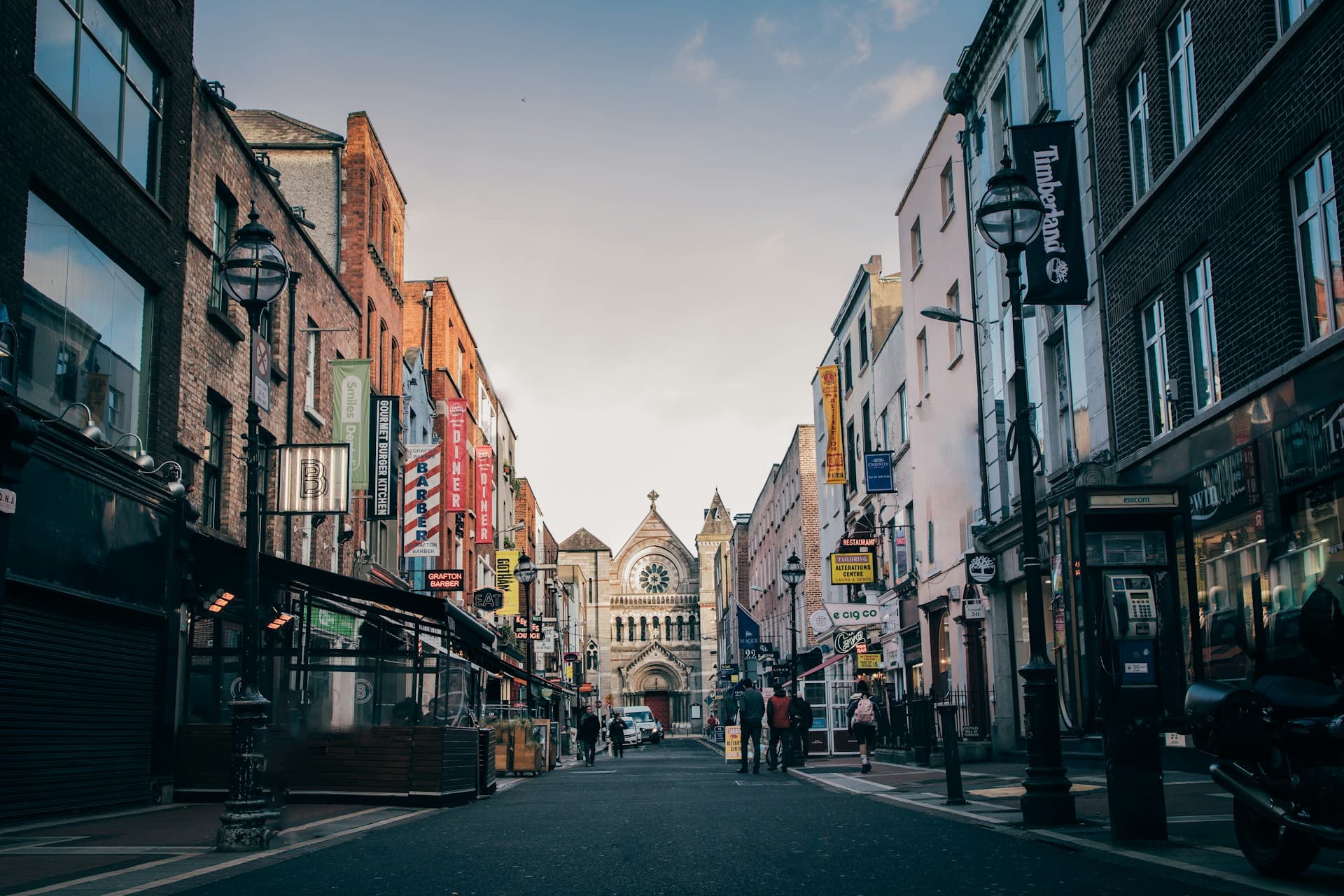
Ireland is one of the fastest-growing economies in Europe, with a large concentration of multinational tech, pharma, and financial services companies. The Critical Skills Employment Permit is the primary pathway for skilled workers, offering a fast track to Stamp 4 (long-term residency) after just two years. English is the working language, which removes one of the biggest barriers to relocation. This guide covers every permit route, cost of living across Irish cities, and the full arrival process from PPS number to IRP card.
Updated March 2026
Ireland Visa Options
Ireland offers several permit pathways for non-EEA citizens. The Critical Skills Employment Permit targets in-demand occupations like software development, engineering, healthcare, and finance, with a salary threshold of €38,000 for roles on the Critical Skills Occupations List (or €64,000 for occupations not on the list). The General Employment Permit covers a broader range of occupations at a €34,000 threshold but requires a labor market needs test, meaning the employer must advertise the role for 28 days and prove no suitable EEA candidate was found. The Start-up Entrepreneur Programme grants residency to founders with at least €50,000 in funding and an innovative business approved by Enterprise Ireland. The Working Holiday Authorisation is available to citizens of eligible countries aged 18 to 30 for up to 12 months.
- Critical Skills permit holders can apply for Stamp 4 after just 2 years
- No formal language test required for any permit type
- General Employment Permit requires 28-day labor market needs test
- Start-up Entrepreneur Programme requires Enterprise Ireland approval
- Working Holiday available for citizens of the US, Canada, Australia, and other eligible countries
| Visa Type ▲ | Income Threshold | Processing | Duration | Path to PR |
|---|---|---|---|---|
| Critical Skills Employment Permit Fast-track for in-demand occupations | €38,000 | 2 months | 2 years | Yes |
| General Employment Permit Standard work permit with labor market test | €34,000 | 3 months | 2 years | Yes |
| Stamp 0 - Retiree / Person of Independent Means Permission to reside in Ireland for retirees or financially independent persons | €50,000 | 2 months | 1 year | No |
| Start-up Entrepreneur Programme For innovative start-up founders | €50,000 | 3 months | 2 years | Yes |
| Study Visa (Stamp 2) Immigration permission for non-EEA nationals enrolled in an ILEP-listed course in Ireland | N/A | 2 months | 1 year | No |
| Working Holiday Authorisation For young adults (18-30) from eligible countries to work and travel in Ireland for up to 12 months | €2,500 | 2 months | 1 year | No |
Cost of Living in Ireland
Ireland is one of the more expensive countries in the EU, driven largely by Dublin housing costs. A one-bedroom apartment in Dublin city center runs €1,800 to €2,400 per month. Cork, Galway, and Limerick are 25 to 40 percent cheaper, with city-center one-bedrooms ranging from €1,200 to €1,600. Groceries are roughly 10 to 15 percent above the EU average. Dining out is expensive by European standards, with a meal at a mid-range restaurant costing €15 to €25 per person. Public transport in Dublin (Luas, DART, Dublin Bus) costs around €100 per month with a Leap Card. Outside Dublin, car ownership is more practical as public transport networks are limited. A single person can live comfortably on €2,500 to €3,200 per month outside Dublin, including rent. In Dublin, budget €3,200 to €4,000.
Language Requirements
Ireland is an English-speaking country, and there is no formal language exam required for any employment permit, Stamp 4, or citizenship. The citizenship interview is conducted in English or Irish, but there is no standardized test or CEFR-level requirement. Irish (Gaeilge) is the first official language and is required for certain public sector roles, particularly in education and in Gaeltacht regions, but it is not a factor for most private-sector employment. Healthcare professionals registering with the Nursing and Midwifery Board of Ireland (NMBI) or the Medical Council of Ireland may need to demonstrate English proficiency through the OET (Occupational English Test). For the vast majority of workers relocating to Ireland, English fluency is sufficient for every stage of immigration and employment.
Credential Recognition
Foreign qualifications are assessed through Quality and Qualifications Ireland (QQI), which operates as Ireland's NARIC center. QQI provides comparability statements that map your degree to the Irish National Framework of Qualifications (NFQ), from Level 1 to Level 10. The process takes 4 to 8 weeks and is done online. Regulated professions require additional steps. Doctors must register with the Medical Council of Ireland, which involves credential verification, English language assessment, and in some cases the PRES (Pre-Registration Examination System). Nurses and midwives register through the NMBI. Engineers can seek professional title recognition through Engineers Ireland. Architects must apply to the RIAI (Royal Institute of the Architects of Ireland). Start the QQI process early, as the Critical Skills Employment Permit application requires proof of qualifications at submission.
Visa Application Process
Employment permit applications are submitted online through the Department of Enterprise, Trade and Employment (DETE) portal. Either the employer or the employee can submit the application, though in practice most employers handle it. The Critical Skills Employment Permit takes approximately 8 weeks to process. The General Employment Permit takes around 12 weeks due to the additional labor market needs test. You will need a signed employment contract, certified copies of qualifications, a copy of your passport, and the employer's registration details. The application fee is €1,000 for a 2-year permit. Once the permit is granted, non-visa-required nationals can travel directly to Ireland and register with immigration. Visa-required nationals must also obtain an entry visa (D visa) from the Irish embassy before traveling. After arrival, you must register with the local immigration office within 90 days to receive your IRP (Irish Residence Permit) card.
Path to Permanent Residency and Citizenship
Ireland does not have a formal permanent residency category in the way most EU countries do. Instead, the equivalent is Stamp 4, which grants permission to live and work in Ireland without an employment permit. Critical Skills Employment Permit holders can apply for Stamp 4 after 2 years. General Employment Permit holders qualify after 5 years of continuous employment. Stamp 4 is renewed every 2 years and has no limit on renewals. For citizenship, the standard requirement is 5 years of residence in the last 9 years, including 1 continuous year immediately before the application. Time spent on student visas or asylum counts as reckonable residence. Ireland allows dual citizenship with no restrictions, so you do not need to renounce your existing nationality. The citizenship application (Form 8) is submitted to the Department of Justice and takes 12 to 18 months to process. There is no citizenship test, but there is a brief interview.
Not Set on a Destination Yet? Check Out Some of Our Other Country Guides

Your First Days in Ireland
Your first priority after arriving in Ireland is obtaining a PPS (Personal Public Service) number, which is required for employment, tax registration, and accessing public services. Apply at your local Intreo Centre with your passport, proof of address, and a letter from your employer. Next, register with immigration to receive your IRP (Irish Residence Permit) card. In Dublin, appointments are booked online through the Burgh Quay Registration Office. Outside Dublin, register at your local Garda station. Open a bank account at AIB, Bank of Ireland, or one of the newer digital banks. Most banks require your passport, proof of address, and PPS number. Register with Revenue (the Irish tax authority) using Revenue's myAccount portal to set up your tax credits and ensure correct PAYE deductions. Expect the full setup process to take 2 to 4 weeks.
1
📋Register with Immigration (IRP)
Non-EEA nationals must register with the Irish Naturalisation and Immigration Service (INIS) and obtain an Irish Residence Permit (IRP) card within 90 days of arrival. EEA/Swiss citizens do not need to register.
~2 weeks2
⚖️Obtain PPS Number
The Personal Public Service (PPS) Number is required for employment, tax, and accessing public services in Ireland. Apply through MyWelfare.ie or visit your local Intreo centre.
~3 weeks3
🏦Open Irish Bank Account
Establish banking with a major Irish provider such as AIB, Bank of Ireland, or Permanent TSB. Most banks require proof of address and a PPS number, though some offer starter accounts without PPS.
~2 weeks4
🛡️Register for Healthcare (HSE)
Register with the Health Service Executive (HSE) for public healthcare. Apply for a medical card or GP visit card if eligible, or arrange private health insurance. All residents can access emergency care.
~4 weeks5
📋Carry IRP Card as ID
Your Irish Residence Permit (IRP) card serves as official proof of identity and immigration status in Ireland. Carry it at all times and renew before expiry (typically annually or every 2 years).
~2 weeks6
🏠Secure Long-Term Accommodation
Transition from temporary housing to a long-term rental. Search via Daft.ie or MyHome.ie, and ensure your landlord registers the tenancy with the Residential Tenancies Board (RTB).
~6 weeks7
⚙️Join Community and Social Groups
Integrate into Irish society through local GAA clubs, community centres, language exchanges, and cultural events. Dublin City Council and local authorities offer newcomer programs and support.
~8 weeksMoving with Family
Critical Skills Employment Permit holders can bring their spouse and dependent children immediately. The spouse receives a Stamp 1G, which allows them to work in Ireland without a separate employment permit. General Employment Permit holders must wait 12 months before applying for family reunification. Children are entitled to free primary and secondary education in the public system. Ireland has both English-medium and Irish-medium (Gaelscoileanna) schools. International schools are available in Dublin and a few other cities, with annual fees ranging from €6,000 to €20,000. Childcare is expensive, averaging €1,000 to €1,300 per month in Dublin for full-time care. The National Childcare Scheme (NCS) provides subsidies for children aged 6 months to 15 years, which can reduce costs significantly depending on household income.
Healthcare in Ireland
Ireland has a two-tier healthcare system. The public system, operated by the HSE (Health Service Executive), provides care to all residents. Everyone is entitled to public hospital care, though there can be long waiting lists for specialist appointments and elective procedures. A GP (general practitioner) visit costs €50 to €70 for most adults. Medical card holders and GP visit card holders receive free or reduced-cost GP care based on income thresholds. Most employment permit holders take out private health insurance through providers like VHI, Laya Healthcare, or Irish Life Health. Premiums range from €800 to €2,500 per year per adult depending on coverage level. Private insurance gives access to private hospitals and significantly shorter wait times. Tax relief of 20% is available on health insurance premiums. Ireland does not require private health insurance for employment permits, but it is strongly recommended given public system wait times.
Taxes in Ireland
Ireland uses a progressive income tax system with two rates: 20% on income up to €42,000 (single person) and 40% on income above that threshold. On top of income tax, you pay USC (Universal Social Charge) at rates from 0.5% to 8%, and PRSI (Pay Related Social Insurance) at 4%. The effective marginal tax rate for higher earners is around 52%. The SARP (Special Assignee Relief Programme) is a significant benefit for inbound executives and senior employees. SARP provides income tax relief of 30% on earnings above €100,000, up to €1 million, for qualifying assignees relocated to Ireland by their employer. It applies for up to 5 consecutive tax years. Ireland does not levy a wealth tax, and capital gains tax is 33%. Corporate tax is 12.5% on trading income, which is a major reason multinationals base European operations here. Property tax (Local Property Tax) applies to homeowners but not renters.
Frequently Asked Questions
Related Resources
Explore Cities
Compare Ireland
Visa guides for Ireland
Ready to Start Planning?
Explore tools, guides, and expert connections to help you plan your move.
Explore Resources