How to Move to Hungary
Hungary offers one of the lowest costs of living in the EU, a central European location, and a growing expat community centered on Budapest. The White Card digital nomad permit launched for remote workers, the Hungarian Card targets highly qualified professionals, and the EU Blue Card is available for high earners. Permanent residency is possible after just 3 years of continuous residence, and citizenship after 8 years total (or 3 years with PR). Budapest in particular has become a hub for tech startups and remote workers.
Updated March 2026
Hungary Visa Options
Hungary has restructured its immigration system in recent years, introducing several new permit categories. The White Card is a digital nomad permit for remote workers employed by companies outside Hungary, requiring proof of sufficient financial means and health insurance. It is valid for 1 year and renewable but does not lead to permanent residency. The Hungarian Card is for highly qualified professionals with an employment contract in specified professional categories, valid for up to 3 years with a path to PR. The Guest Worker Permit covers workers with basic to secondary qualifications in employer-sponsored roles. The EU Blue Card targets highly qualified workers earning at least 150% of the average gross annual salary (roughly EUR 45,000), with higher education or 5 years of professional experience. All permits except the White Card lead to permanent residency.
- White Card for digital nomads processes in about 3 weeks
- Hungarian Card offers 3-year permits for qualified professionals
- EU Blue Card requires roughly EUR 45,000 annual salary
- National permanent residency available after just 3 years
- Guest Worker Permit available for trades and hospitality
| Visa Type ▲ | Income Threshold | Processing | Duration | Path to PR |
|---|---|---|---|---|
| EU Blue Card For highly qualified workers | €45,000 | 3 weeks | 4 years | Yes |
| Guest Investor Residence Permit (Vendegbefekteto) Golden visa program for investors in Hungarian real estate funds or property (launched 2024) | €250,000 | 4 weeks | 10 years | Yes |
| Guest Self-Employment Residence Permit Residence permit for non-EU nationals building a professional life in Hungary through registered self-employment or as an executive of a Hungarian business. Distinct from the Guest Investor Residence Permit (passive investment). Capped at 3 years total. | N/A | 3 weeks | 1 year | No |
| Guest Worker Permit For workers with basic to secondary qualifications | N/A | 3 weeks | 3 years | Yes |
| Hungarian Card (High Qualification) For highly qualified professionals | N/A | 3 weeks | 3 years | Yes |
| Residence Permit - Other Purpose Residence permit for financially self-sufficient individuals including retirees | N/A | 2 months | 2 years | Yes |
| Residence Permit for Studies Residence permit for third-country nationals enrolled full-time at a Hungarian higher education institution | N/A | 4 weeks | 1 year | Yes |
| White Card (Digital Nomad) For remote workers with foreign employers | N/A | 3 weeks | 1 year | No |
Cost of Living in Hungary
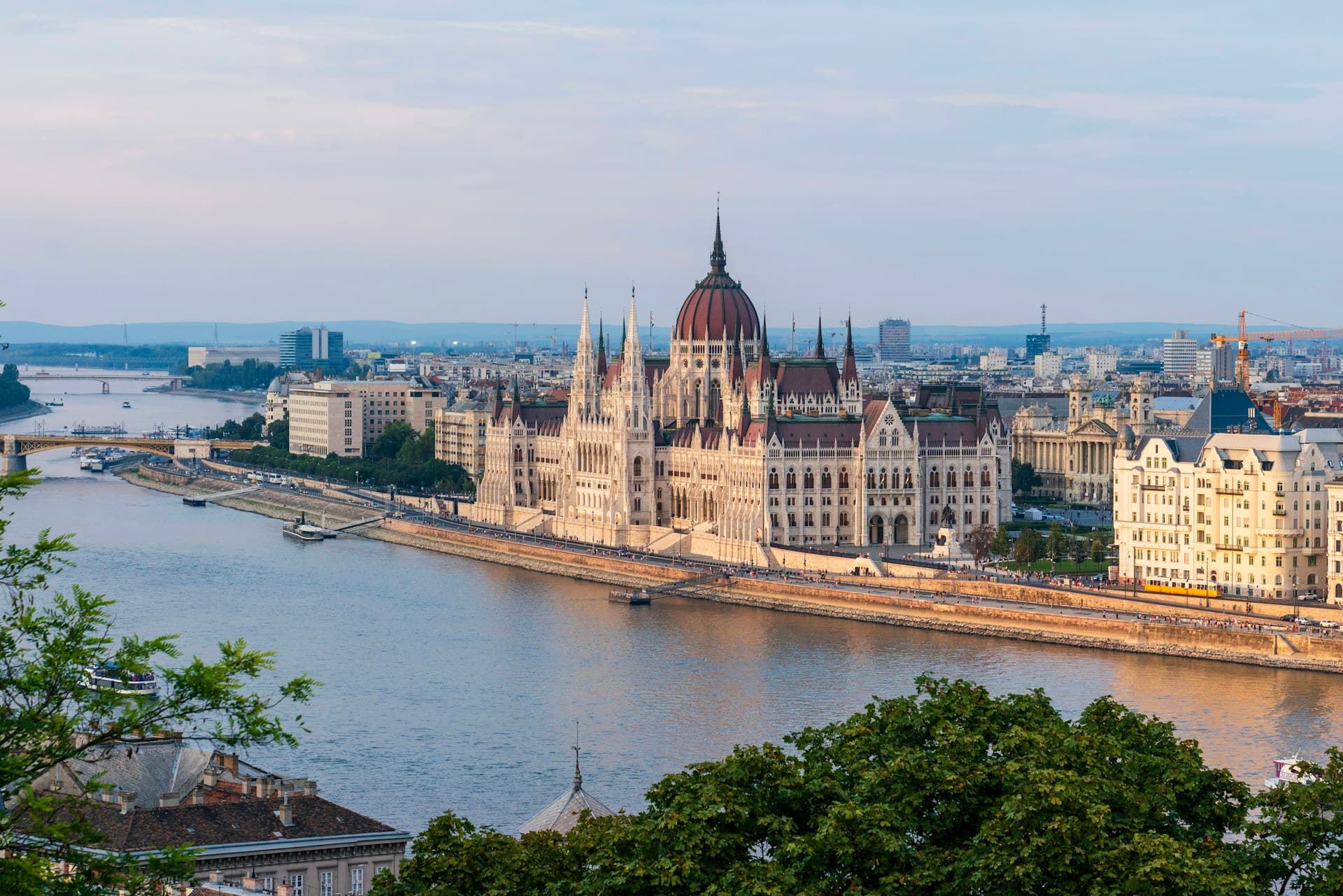
Hungary is one of the most affordable EU countries for expats. Budapest is the primary destination, with one-bedroom apartments in the city center running HUF 200,000 to HUF 350,000 per month ($540 to $950). Districts V, VI, and VII are the most popular expat neighborhoods. A single person can live comfortably in Budapest on HUF 400,000 to HUF 600,000 per month ($1,080 to $1,620) including rent. Groceries are significantly cheaper than in Western Europe, with a weekly shop costing HUF 15,000 to HUF 25,000. Dining out at a mid-range restaurant costs HUF 3,000 to HUF 6,000 per person. Budapest's public transport system is extensive and affordable at HUF 530 per single ticket or HUF 9,500 for a monthly pass. Cities outside Budapest like Debrecen and Szeged are 20 to 30 percent cheaper.
Language Requirements
No formal language test is required for permanent residency in Hungary, though an integration assessment applies. Citizenship requires Hungarian language proficiency at roughly B1 level, assessed through a Hungarian language and Constitution knowledge test during the naturalization process. Hungarian is a Finno-Ugric language unrelated to its neighboring Slavic and Germanic languages, with an agglutinative grammar system and 18 grammatical cases. It is widely considered one of the most difficult European languages for English speakers, and reaching B1 typically takes 18 to 24 months of dedicated study. In Budapest, English is widely spoken in business, tech, and tourism. Outside Budapest, Hungarian is essential for daily life.
Credential Recognition
Foreign academic credentials are evaluated by the Hungarian Equivalence and Information Centre (MEIK), which operates as Hungary's ENIC-NARIC center. EU and EEA degrees are generally recognized under EU directives. Non-EU degrees require a formal recognition process that takes 2 to 3 months and involves submitting apostilled and translated documents. Regulated professions including medicine, engineering, law, and teaching require additional licensing through Hungarian professional chambers. For the Hungarian Card and EU Blue Card, your employer must demonstrate that your qualifications meet the role requirements. Start credential recognition before applying for your work permit, as it can be a bottleneck.
Visa Application Process
Non-EU nationals apply for an entry visa at a Hungarian consulate, then apply for their residence permit after arrival. The White Card, Hungarian Card, and Guest Worker Permit all have a target processing time of about 3 weeks (21 days), with a decision deadline of 70 days. Applications are submitted to the National Directorate-General for Aliens Policing or its regional offices. Required documents vary by permit type but generally include a valid passport, employment contract or proof of remote work, proof of accommodation, health insurance, and a clean criminal record. The Enter Hungary portal (enterhungary.gov.hu) handles online applications and appointment scheduling. EU Blue Card applications follow the same process with additional salary documentation.
Path to Permanent Residency and Citizenship
Hungary offers one of the fastest paths to permanent residency in the EU. National permanent residence requires just 3 years of continuous legal residence (compared to 5 years in most EU countries). The EU Long-Term Resident permit requires the standard 5 years. Citizenship requires 8 years of total legal residence, or 3 years of continuous residence with a permanent residence permit. The naturalization process includes a Hungarian language and Constitution knowledge test. Hungary allows dual citizenship, so you do not need to renounce your original nationality. Ethnic Hungarians from neighboring countries can access simplified naturalization procedures. The White Card does not count toward permanent residency.

Your First Days in Hungary
Register your address at the local government office (kormanyhivatal) within 3 days of finding accommodation to receive your address card. Apply for your residence permit at the Immigration Office as soon as possible. Open a bank account with your passport and residence permit application confirmation. OTP Bank, Erste Bank, and Raiffeisen are widely used. Get a Hungarian SIM card from Telekom, Vodafone, or Yettel. Register for your tax number (adoazonosito jel) at the NAV (National Tax and Customs Administration) office, which is needed for employment and banking. Apply for a TAJ card (social insurance card) through your employer for healthcare access.
📋Register Your Address
Register your Hungarian address at a Kormányablak (Government Window) office or local district office to receive your lakcímkártya (address card). This is mandatory within 93 days of arrival and required for most administrative procedures.
~1 weeks🏦Open a Hungarian Bank Account
Open a local bank account with a Hungarian institution such as OTP Bank, Erste Bank Hungary, K&H Bank, or Raiffeisen Bank Hungary. A Hungarian bank account is essential for salary payments, bill payments, and daily transactions.
~2 weeks⚖️Register for Tax Number
Obtain your Hungarian tax number (adószám) from the NAV (Nemzeti Adó- és Vámhivatal, National Tax and Customs Administration). This 11-digit number is required for employment, opening a bank account, and filing taxes.
~2 weeks🛡️Enroll in Public Healthcare
Register with NEAK (Nemzeti Egészségbiztosítási Alapkezelő, National Health Insurance Fund) to access the Hungarian public healthcare system. You will receive a TAJ card (social security number) that grants access to healthcare services.
~3 weeks📋Obtain Residence Permit
Apply for your Hungarian residence permit through the OIF (Országos Idegenrendészeti Főigazgatóság, National Directorate-General for Aliens Policing). The permit type depends on your purpose of stay (work, study, family reunification, etc.).
~8 weeks🏠Secure Long-Term Housing
Find permanent accommodation in Hungary using platforms like Ingatlan.com, Otthonterkep.hu, or local real estate agencies. Budapest and other cities offer diverse rental and purchase options, with most contracts requiring a deposit and advance rent.
~4 weeks⚙️Build Your Community Network
Connect with local and expat communities in Hungary through social groups, language exchanges, cultural events, and professional networks. Join Hungarian language courses to facilitate integration and daily interactions.
~12 weeksMoving with Family
Spouses and children of residence permit holders can apply for family reunification permits. Spouses receive a residence permit that allows them to work in Hungary. Hungarian public schools are free and compulsory from ages 6 to 16, with instruction in Hungarian. International schools in Budapest offer IB, British, and American curricula, with annual fees ranging from HUF 2,500,000 to HUF 8,000,000 ($6,750 to $21,600). Public childcare (bolcsode for ages 0 to 3, ovoda for 3 to 6) is available and affordable, though waitlists in popular Budapest districts can be long. The Hungarian family support system provides various benefits including a family tax allowance and childcare allowance (GYED/GYES) for legal residents.
Healthcare in Hungary
Hungary has a public healthcare system funded through mandatory social insurance contributions (18.5% of gross salary, split between employer and employee). Public healthcare covers most services but specialist wait times can be significant, and English-speaking staff are uncommon outside Budapest. Private healthcare is growing, with clinics like FirstMed and Rozsakert Medical Center offering English-speaking care. A private specialist consultation costs HUF 15,000 to HUF 30,000 ($40 to $80). Private health insurance costs HUF 20,000 to HUF 60,000 per month ($54 to $162). Emergency care is available at public hospitals for all residents. Dental care in Hungary is notably affordable and attracts medical tourists from Western Europe.
Taxes in Hungary
Hungary has a flat personal income tax rate of 15%, one of the lowest in the EU. Social contributions total 18.5% of gross salary (13% social contribution tax paid by employer, plus 18.5% employee contributions). Hungary does not tax worldwide income for non-domiciled individuals in most cases. Capital gains are taxed at 15%. VAT is 27%, the highest in the EU. There is no wealth tax. Hungary offers significant tax incentives for families, including a tax exemption for mothers under 30 with children and a family tax allowance that reduces the tax base. The country has double taxation agreements with over 80 countries. Digital nomads on the White Card may benefit from tax treaties depending on their country of tax residence.
Frequently Asked Questions
Related Resources
Explore Cities
Compare Hungary
Visa guides for Hungary
Ready to Start Planning?
Explore tools, guides, and expert connections to help you plan your move.
Explore Resources