How to Move to Croatia
Croatia joined the EU in 2013 and the Schengen Area in 2023, making it a fully integrated European destination with lower costs than Western Europe. The country launched its Digital Nomad Temporary Stay permit in 2021, attracting remote workers to cities like Zagreb, Split, and Dubrovnik. This guide covers every visa route, cost of living across major cities, and the full arrival process from OIB registration to residency.
Updated March 2026
Croatia Visa Options
Croatia offers three main visa pathways for non-EU citizens. The Digital Nomad Temporary Stay permit targets remote workers employed by companies outside Croatia, requiring a minimum monthly income of EUR 3,295 (roughly 2.5 times the average Croatian net salary). The standard Work Permit requires employer sponsorship from a Croatian company, with no fixed salary threshold. The EU Blue Card is available for highly qualified workers with a higher education degree and an employment contract meeting the minimum salary threshold. EU/EEA citizens can live and work in Croatia freely under freedom of movement rules.
- Digital Nomad permit allows stays of up to 18 months
- EU Blue Card grants up to 4 years of residence
- Work Permit holders can apply for permanent residency after 5 years
- Digital Nomad holders are exempt from Croatian income tax
- EU/EEA citizens need only register their stay, no visa required
| Visa Type ▲ | Income Threshold | Processing | Duration | Path to PR |
|---|---|---|---|---|
| Digital Nomad Temporary Stay For remote workers using communication technology (launched 2021) | €39,540 | 4 weeks | 1.5 years | No |
| EU Blue Card For highly qualified workers | N/A | 2 months | 4 years | Yes |
| Privremeni boravak u svrhu studiranja Temporary residence permit for third-country nationals at Croatian higher education institutions | N/A | 4 weeks | 1 year | No |
| Self-Employment Temporary Residence Temporary residence and work permit for third-country nationals who own at least 51% of a Croatian d.o.o. (limited liability company) or operate as a registered sole trader (obrt). Issued by the Ministry of Interior (MUP) under the Aliens Act. | N/A | 2 months | 1 year | Yes |
| Temporary Stay Permit - Other Reasons Temporary residence permit for financially self-sufficient individuals including retirees | N/A | 2 months | 1 year | Yes |
| Work Permit For employment with Croatian companies | N/A | 2 months | 2 years | Yes |
Cost of Living in Croatia
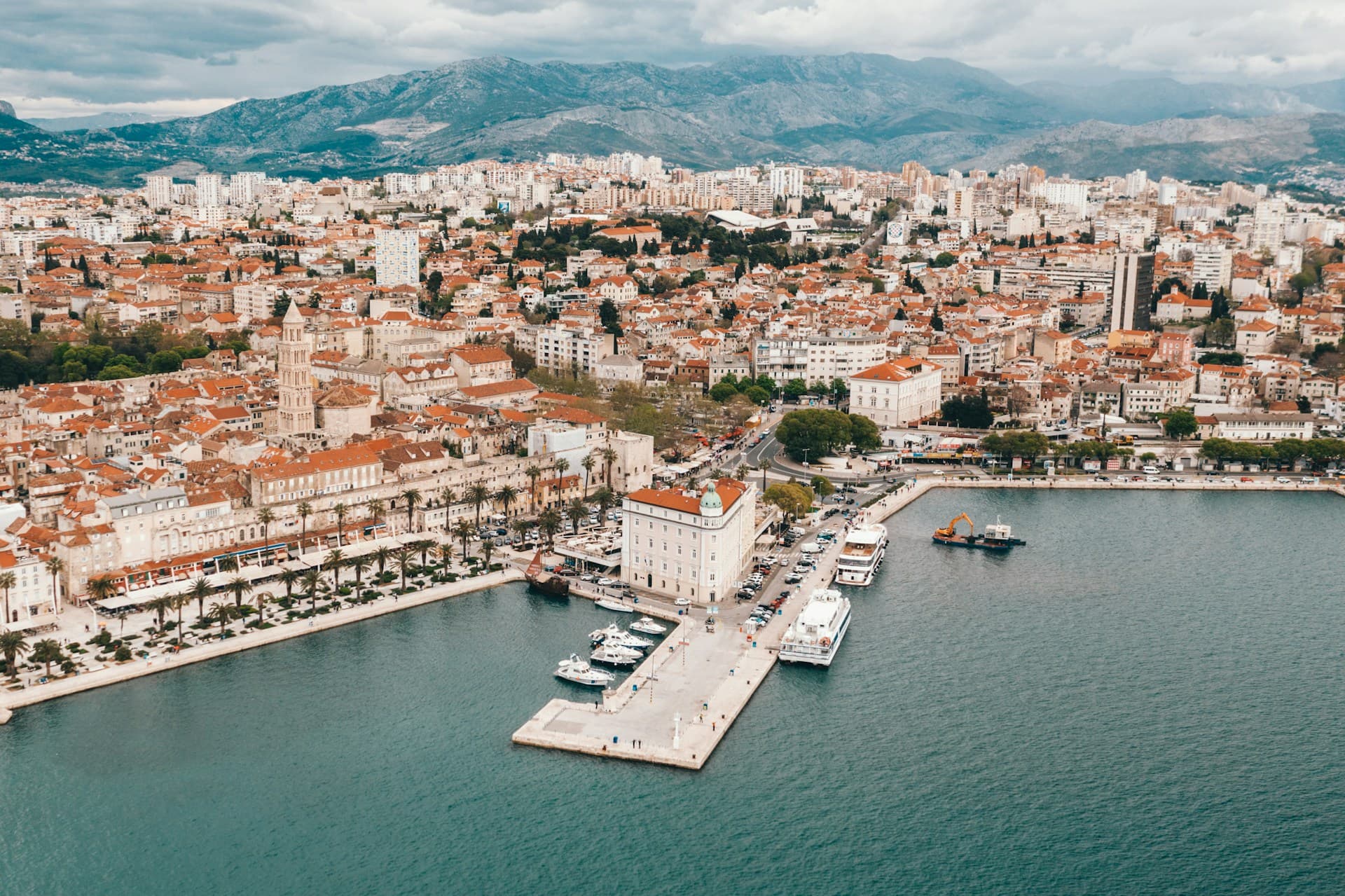
Croatia is significantly cheaper than Western Europe, though prices in coastal tourist areas like Dubrovnik and Split are higher than inland cities. Zagreb, the capital, offers one-bedroom apartments in the city center for EUR 500 to EUR 800 per month. Split runs EUR 600 to EUR 900 in season. Groceries and dining are 40 to 50 percent cheaper than Germany or France. A single person can live comfortably on EUR 1,200 to EUR 1,600 per month in Zagreb, including rent. Croatia adopted the euro in January 2023, eliminating currency exchange concerns for those coming from the eurozone.
Language Requirements
Croatian language proficiency is required at the permanent residency and citizenship stages. Permanent residence applications require proof of A2 Croatian, covering basic conversational ability. Citizenship requires B1 Croatian along with a Croatian culture and history test. No formal language requirement exists for initial visa applications. English is widely spoken in Zagreb and tourist areas, but daily life outside major cities operates primarily in Croatian. Learning at least basic Croatian significantly improves the experience of dealing with government offices and landlords.
Credential Recognition
Foreign degrees and professional qualifications must be recognized through the Agency for Science and Higher Education (ENIC-NARIC Croatia). The recognition process typically takes 2 to 4 months and involves submitting apostilled and translated copies of your diploma. Regulated professions such as medicine, law, and engineering require additional licensing through the relevant Croatian professional chamber. Start the credential recognition process early, as the EU Blue Card application specifically requires proof of a recognized higher education degree.
Visa Application Process
Most Croatian visa applications are submitted at the Croatian embassy or consulate in your country of residence. The Digital Nomad permit can also be applied for online through the Croatian Ministry of Interior. Processing times range from 4 weeks for the Digital Nomad permit to 8 weeks for Work Permits and EU Blue Cards. Required documents include a valid passport, criminal background check (apostilled and translated), proof of health insurance covering the entire stay, proof of accommodation in Croatia, and financial documentation meeting your visa type requirements. The Digital Nomad permit has a 6-month cooling-off period after the 18-month stay expires before you can reapply.
Path to Permanent Residency and Citizenship
Permanent residency in Croatia requires 5 years of continuous legal residence on a permit that counts toward PR (the Digital Nomad permit does not). Cumulative absences must not exceed 10 months over the 5-year period. You must demonstrate A2 Croatian language proficiency at the PR stage. Citizenship requires 8 years of legal residence (5 years to PR, then 3 additional years), B1 Croatian proficiency, and passing a culture and history test. Croatia allows dual citizenship, so you do not need to renounce your original nationality. Citizenship by descent is also available if you have Croatian ancestors.
Your First Days in Croatia
After arriving in Croatia, your first administrative task is obtaining an OIB (Osobni Identifikacijski Broj), your personal identification number. The OIB is required for opening a bank account, signing a rental contract, registering for healthcare, and dealing with any government service. You can obtain it at any Tax Administration office. Next, register your temporary stay at the local police station within 3 days of arrival (your accommodation provider may do this for you). Expect the full setup process to take 2 to 4 weeks.
📋Address Registration
Register your residence address at the local police station (policijska postaja) within 3 days of arrival. This is mandatory for all foreign residents and required before applying for residence permits.
~1 weeks⚖️OIB Tax Number Registration
Obtain your OIB (Osobni identifikacijski broj) from the Tax Administration (Porezna uprava). This personal identification number is essential for employment, banking, healthcare enrollment, and all official transactions in Croatia.
~2 weeks📋Biometric Residence Permit
Apply for your biometric residence permit at the Ministry of Interior (Ministarstvo unutarnjih poslova, MUP). This is your official ID card in Croatia and must be carried at all times. Processing takes 30-60 days.
~8 weeks🏦Open Croatian Bank Account
Open a bank account with a Croatian bank such as Zagrebačka banka (ZABA), Privredna banka Zagreb (PBZ), or Erste Bank Croatia. An OIB is required, and some banks may require proof of residence permit.
~2 weeks🛡️Healthcare Registration (HZZO)
Enroll in the Croatian public healthcare system through HZZO (Hrvatski zavod za zdravstveno osiguranje). Employment-based enrollment is automatic; others may need private insurance or voluntary contribution.
~3 weeks🏠Secure Long-Term Housing
Find permanent accommodation using Croatian rental platforms like Njuškalo, Index Oglasi, or local real estate agencies. Standard leases are 1 year minimum, with 1-2 months deposit. Rental contracts must be registered with the Tax Administration.
~4 weeks⚙️Social Integration and Community Building
Connect with local and expat communities in Croatia. Join language exchange groups, attend cultural events, and participate in local activities to build your social network and improve Croatian language skills.
~12 weeksMoving with Family
Family reunification is available for holders of temporary and permanent residence permits. Spouses and children under 18 can apply for family reunification permits. Croatian public education is free and compulsory from ages 6 to 15. International schools exist in Zagreb, with annual fees ranging from EUR 5,000 to EUR 12,000. Childcare is available through public kindergartens (vrtici), though waitlists in Zagreb can be long. Private options are available at EUR 300 to EUR 500 per month.
Healthcare in Croatia
Croatia has a public healthcare system (HZZO) funded through mandatory health insurance contributions. Workers with Croatian employment contracts and their dependents receive full public coverage. Digital nomad permit holders and those not employed locally must arrange private health insurance, which costs EUR 60 to EUR 150 per month depending on age and coverage. Private healthcare is available in Zagreb and Split with shorter wait times. Public healthcare quality is generally good for primary care and emergencies, though specialist wait times can be longer than in Western Europe.
Taxes in Croatia
Croatia taxes residents on worldwide income using a two-bracket system: 23.6% on income up to EUR 50,400 per year, and 35.4% on income above that threshold (rates include the municipal surtax for Zagreb). Digital nomad permit holders are explicitly exempt from Croatian income tax, as their income is earned from foreign sources. Croatia has no wealth tax. VAT is 25% on most goods and services, with reduced rates of 13% and 5% on certain items. Social security contributions for employed workers total approximately 36.5% (split between employer and employee). Double taxation treaties exist with most major countries.
Frequently Asked Questions
Related Resources
Explore Cities
Compare Croatia
Visa guides for Croatia
Ready to Start Planning?
Explore tools, guides, and expert connections to help you plan your move.
Explore Resources