How to Move to Brazil
Brazil offers one of the most accessible immigration systems in Latin America, with a low-threshold Digital Nomad Visa, a straightforward investor visa, and one of the shortest paths to citizenship for Portuguese speakers. The Digital Nomad Visa (VITEM XIV) requires just $1,500 per month in income. The investor visa starts at BRL 500,000. Retirees can qualify with proof of pension income. This guide covers every visa route, the cost of living across major cities, and the full process from CPF registration to permanent residency and citizenship.
Updated March 2026
Brazil Visa Options
Brazil offers three main visa pathways for immigrants. The Digital Nomad Visa (VITEM XIV), launched in January 2022, targets remote workers employed by foreign companies, requiring proof of $1,500 per month in income or $18,000 in savings. It is valid for 1 year and renewable for a second year. The Work Visa (VITEM V) requires a job offer from a Brazilian company with authorization from the Labor Ministry. The Investor Visa grants residence through a minimum BRL 500,000 investment in a Brazilian business that creates local jobs. Brazil also allows retirement residence for those with provable pension income, and Mercosur nationals from neighboring countries have simplified pathways.
- Digital Nomad Visa has one of the lowest income thresholds globally at $1,500/month
- Investor visa starts at BRL 500,000 (roughly $95,000)
- Citizenship possible in just 1 year for Portuguese-speaking nationals
- No formal language requirement for any visa application
- Work visa requires Labor Ministry authorization and employer sponsorship
- All visa types can eventually lead to permanent residency
| Visa Type ▲ | Income Threshold | Processing | Duration | Path to PR |
|---|---|---|---|---|
| Digital Nomad Visa (VITEM XIV) For remote workers employed by foreign companies (launched Jan 2022) | €17,000 | 2 months | 1 year | No |
| Investor Visa For foreign investors in Brazilian businesses | €95,000 | 3 months | 4 years | Yes |
| VIPER - Permanent Visa for Retirees Permanent visa for foreign retirees with minimum monthly pension income | €1,100 | 2 months | 99 years | Yes |
| Visto Temporario VITEM-IV (Estudante) Temporary visa for foreign students enrolled in regular courses at Brazilian institutions | N/A | 4 weeks | 1 year | No |
| Work Visa (VITEM V) For workers with Brazilian employment contract | N/A | 3 months | 2 years | Yes |
Cost of Living in Brazil
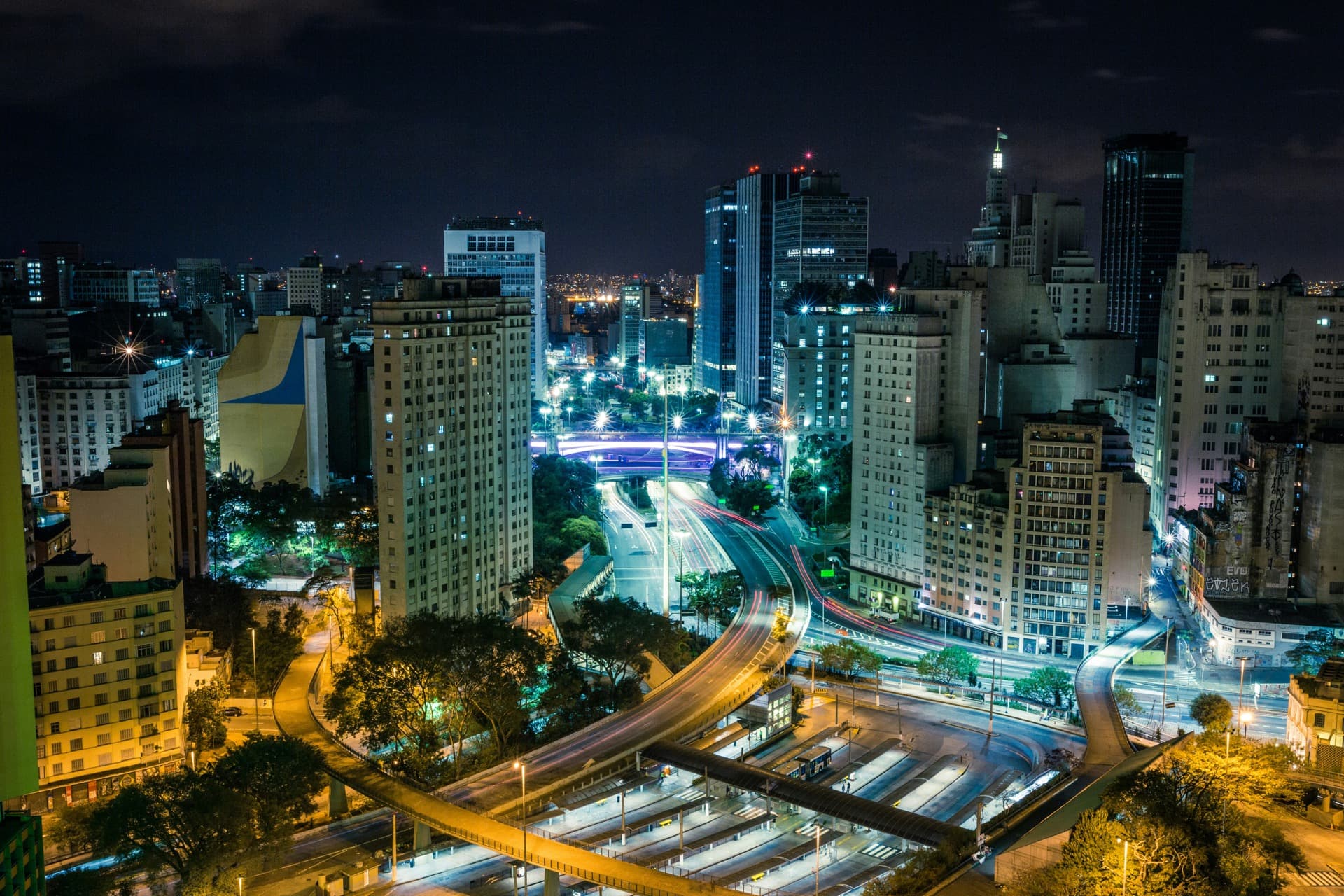
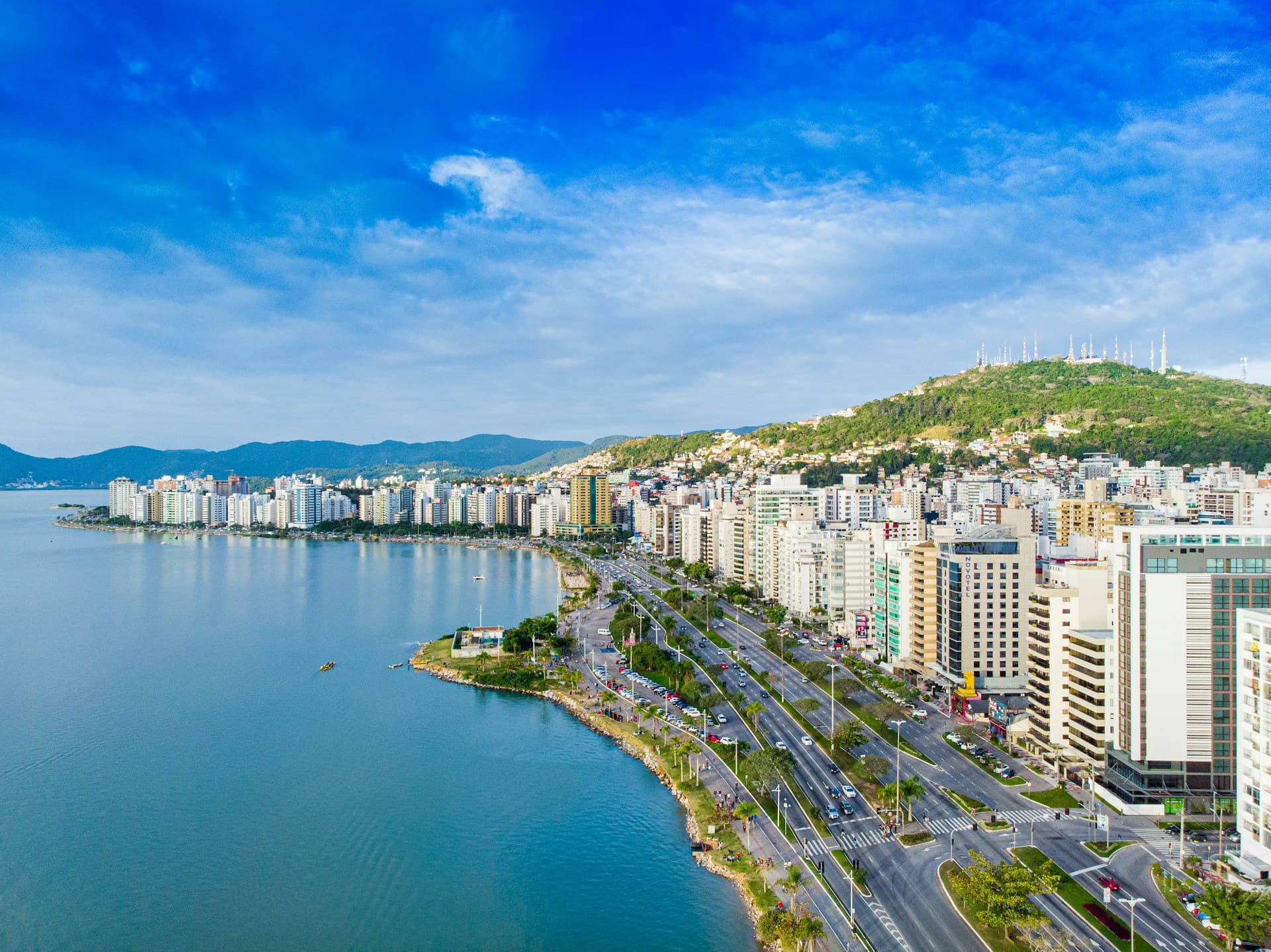
Brazil offers a low cost of living by global standards, especially outside the major economic centers. The average salary is roughly BRL 3,000 per month (about $570) according to IBGE 2024 data. Rent for a one-bedroom apartment in central Sao Paulo or Rio de Janeiro runs BRL 2,000 to BRL 4,000 per month ($380 to $760), while cities like Florianopolis, Curitiba, and Fortaleza are 30 to 50 percent cheaper. Groceries and dining are very affordable, with a restaurant meal costing BRL 25 to BRL 50 ($5 to $10). Public transport in major cities costs BRL 4 to BRL 7 per trip. A single person earning in foreign currency can live comfortably on BRL 5,000 to BRL 8,000 per month ($950 to $1,520) including rent, making Brazil particularly attractive for remote workers.
Language Requirements
No Portuguese proficiency is required for any Brazilian visa application. Daily life in Brazil, however, requires at least functional Portuguese, as English is not widely spoken outside of business environments in major cities. Citizenship requires basic Portuguese, which is assessed through the Celpe-Bras exam or during the naturalization interview. Celpe-Bras is offered twice per year in Brazil and at select locations abroad. Portuguese speakers from Portugal, Angola, Mozambique, and other lusophone countries qualify for accelerated citizenship after just 1 year of residence instead of the standard 4 years. Most learners with consistent study reach conversational Portuguese within 6 to 12 months.
Credential Recognition
Foreign degrees in Brazil must be validated (revalidacao) through a Brazilian public university designated by the Ministry of Education (MEC). The process involves submitting your original degree, transcripts (translated and notarized by a sworn translator), and supporting documentation to a university that offers a comparable program. Processing takes 6 to 18 months and costs vary by institution. Regulated professions like medicine, law, and engineering require additional steps. Foreign doctors must revalidate their degree and pass the Revalida exam. Lawyers must pass the OAB exam (Ordem dos Advogados do Brasil). Engineers register with the regional CREA council. Start the credential process well before you plan to work in a regulated field.
Visa Application Process
Brazilian visa applications are submitted at the Brazilian consulate in your country of residence. The Digital Nomad Visa requires proof of remote employment or freelance income ($1,500/month or $18,000 savings), health insurance valid in Brazil, a clean criminal background check, and a valid passport. Processing takes about 8 weeks. The Work Visa requires the employer to first obtain authorization from the General Coordination of Immigration (CGIg) under the Labor Ministry, which takes 4 to 8 weeks, followed by the consular application. All documents must be apostilled and translated by a sworn translator. After arrival, you must register at the Federal Police within 90 days to receive your CRNM (National Migration Registration Card), Brazil's equivalent of a residence card.
Path to Permanent Residency and Citizenship
Permanent residency in Brazil requires 4 years of legal residence on a temporary visa. Investor visa holders may qualify earlier if they maintain their investment and create the required jobs. You must not be absent from Brazil for more than 2 consecutive years during the qualifying period. Citizenship normally requires 4 years of permanent or temporary residence and basic Portuguese. Nationals of Portuguese-speaking countries qualify after just 1 year. Spouses of Brazilian citizens can apply after 1 year of marriage with residence. Brazil fully permits dual citizenship, so you do not need to renounce your original nationality. The naturalization process involves an application to the Ministry of Justice, background checks, and a language assessment.

Your First Days in Brazil
After arriving in Brazil, your first priority is registering with the Federal Police to obtain your CRNM (National Migration Registration Card). This must be done within 90 days of arrival and requires your passport, visa, proof of address, and passport photos. Next, apply for a CPF (Cadastro de Pessoas Fisicas) at the Receita Federal, which is Brazil's tax identification number and is required for opening bank accounts, signing leases, and buying a phone plan. Open a bank account at Banco do Brasil, Itau, Bradesco, or a digital bank like Nubank (foreigner-friendly). Expect the full setup process to take 3 to 6 weeks.
📋Register Address with Polícia Federal
Register your residential address through SINCRE (Sistema Nacional de Cadastro de Registro de Estrangeiros) and obtain your CRNM (Carteira de Registro Nacional Migratório). This is mandatory within 90 days of arrival and serves as your primary immigration document.
~2 weeks⚖️Obtain CPF Number
Register for a CPF (Cadastro de Pessoas Físicas) with the Receita Federal. This tax identification number is essential for nearly all activities in Brazil: opening bank accounts, signing rental contracts, purchasing property, and employment. Available online or at Banco do Brasil/Caixa Econômica branches.
~1 weeks🏦Open Brazilian Bank Account
Establish banking with a Brazilian institution such as Banco do Brasil, Bradesco, Itaú, or digital bank Nubank. A CPF is mandatory. Traditional banks may require proof of income and address; digital banks like Nubank often have simpler requirements for foreigners.
~1 weeks🛡️Register for Healthcare
Enroll in SUS (Sistema Único de Saúde), Brazil\'s free public healthcare system, by registering at a local UBS (Unidade Básica de Saúde). Alternatively, purchase private health insurance (plano de saúde) from providers like Amil, SulAmérica, or Bradesco Saúde for faster access to private clinics and hospitals.
~2 weeks📋Obtain CRNM Card
The CRNM (Carteira de Registro Nacional Migratório) is your official resident ID card issued by Polícia Federal. It replaces the older RNE and is required for employment, travel within Brazil, and accessing government services. Valid for the duration of your visa.
~2 weeks🏠Secure Long-Term Housing
Find permanent housing through platforms like QuintoAndar, ZAP Imóveis, or OLX. Rental contracts typically require a fiador (guarantor who owns property) or seguro fiança (rental insurance). Budget 3x monthly rent upfront: first month, deposit (caução), and sometimes real estate fee.
~4 weeks⚙️Build Community Connections
Integrate into Brazilian social life through language exchange meetups, expat groups (InterNations, Facebook groups), sports clubs (futsal, volleyball), and cultural events. Brazilians are social and welcoming; attending churrascos (barbecues) and local festivals helps build lasting friendships.
~8 weeksMoving with Family
Work visa and investor visa holders can include dependents (spouses and children under 18) in their visa applications or apply for family reunification after arrival. Dependent visas grant the right to study but not to work without separate authorization. Brazil's public school system is free from preschool through university and is mandatory for ages 6 to 14. School quality varies significantly, and many expats choose private schools (BRL 1,500 to BRL 5,000 per month, roughly $285 to $950). International schools in Sao Paulo, Rio, and Brasilia cost BRL 5,000 to BRL 12,000 per month ($950 to $2,280). Childcare is widely available and affordable by international standards.
Healthcare in Brazil
Brazil has a universal public healthcare system called SUS (Sistema Unico de Saude) that provides free coverage to all residents, including foreigners with legal residence. SUS covers primary care, hospital visits, surgeries, and medications. Quality varies by region, with long wait times common for specialist appointments in the public system. Most middle-class Brazilians and expats supplement with private health insurance (plano de saude), which costs BRL 300 to BRL 1,000 per month ($57 to $190) depending on age and coverage level. Private healthcare in major cities is excellent, with modern facilities and short wait times. Digital Nomad Visa applicants must show proof of health insurance valid in Brazil.
Taxes in Brazil
Brazil taxes residents on worldwide income using progressive rates from 0% to 27.5%. The tax-free threshold is roughly BRL 2,640 per month. Tax residency is established upon arrival for work visa holders or after 183 days of presence in a 12-month period. Brazil has tax treaties with a limited number of countries (fewer than 40), so double taxation can be an issue. Social security contributions (INSS) are mandatory for employed workers at 7.5% to 14% of salary. Self-employed individuals and remote workers on the Digital Nomad Visa should consult a Brazilian tax advisor, as the treatment of foreign-sourced income has specific rules. Annual tax filing is due by April 30 each year through the Receita Federal.
Frequently Asked Questions
Related Resources
Explore Cities
Compare Brazil
Visa guides for Brazil
Ready to Start Planning?
Explore tools, guides, and expert connections to help you plan your move.
Explore Resources